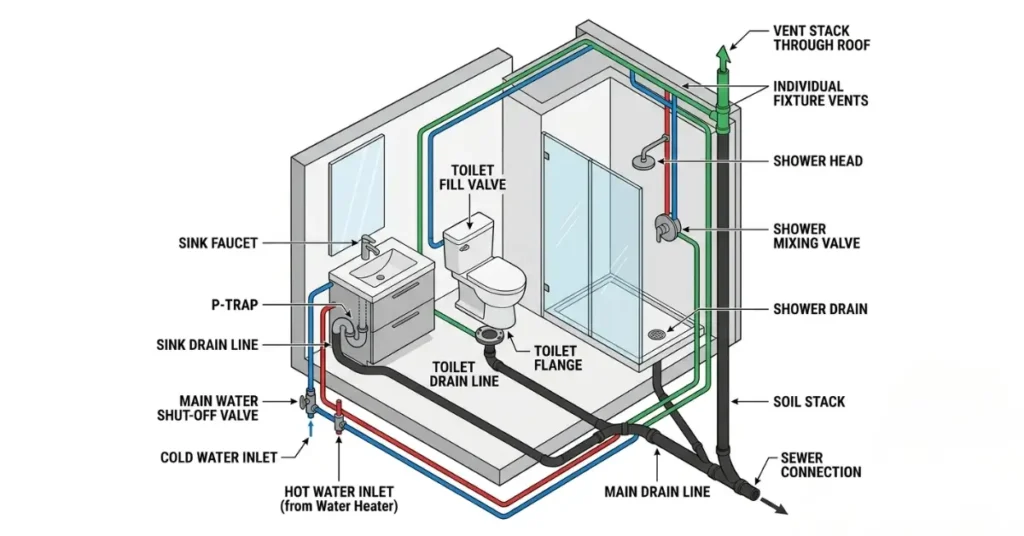
Adding a bathroom in your basement is a smart move. It adds value to your home and gives your family more space. But basement bathroom plumbing is very different from plumbing on your main floor. The main challenge is gravity. Water naturally flows down, but your basement sits below the city sewer line. This means waste cannot flow out on its own. Our complete bathroom plumbing guide explains how standard systems work. This guide focuses specifically on basement systems, costs, codes, and how to avoid breaking concrete.
How to Plumb a Basement Bathroom
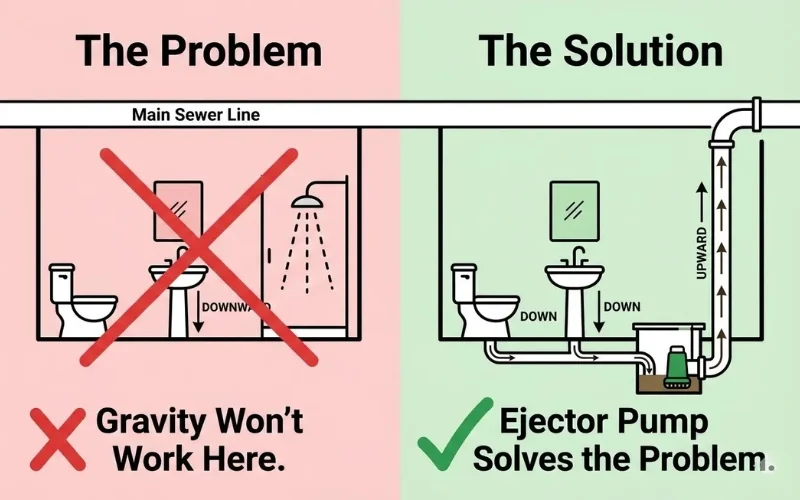
Plumbing a basement bathroom starts with one simple question. Does your basement floor sit above or below your main sewer line? If it sits below, you need a sewage ejector pump. If it sits above, standard gravity drainage works fine. Most basements in cities like Chicago and Denver sit below the sewer line, so ejector pumps are very common in these areas.
The drain-waste-vent system, or DWV system, must be carefully planned for below-grade installations. The International Plumbing Code (IPC) requires all fixtures to connect to properly sized pipes with correct slopes. Your local building department must approve your layout before any work begins.
How to Plumb a Bathroom in the Basement
Start by sketching a simple layout showing where your toilet, sink, and shower will go. Keep all three fixtures close to one wall. This is called the wet wall. It saves pipe, labor, and money. Homes in rural Texas and Florida connected to septic tanks need extra planning. The ejector pump must connect to the septic inlet, not a city sewer. Always hire a licensed plumber for septic system connections.
Basement Bathroom Plumbing Diagrams
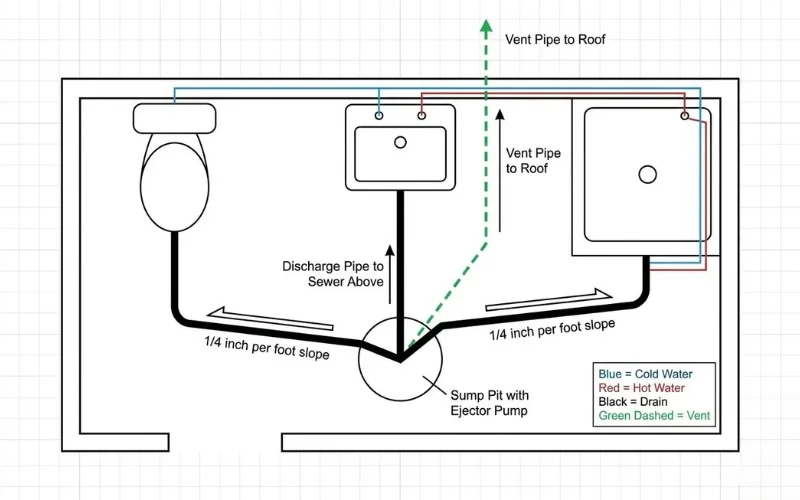
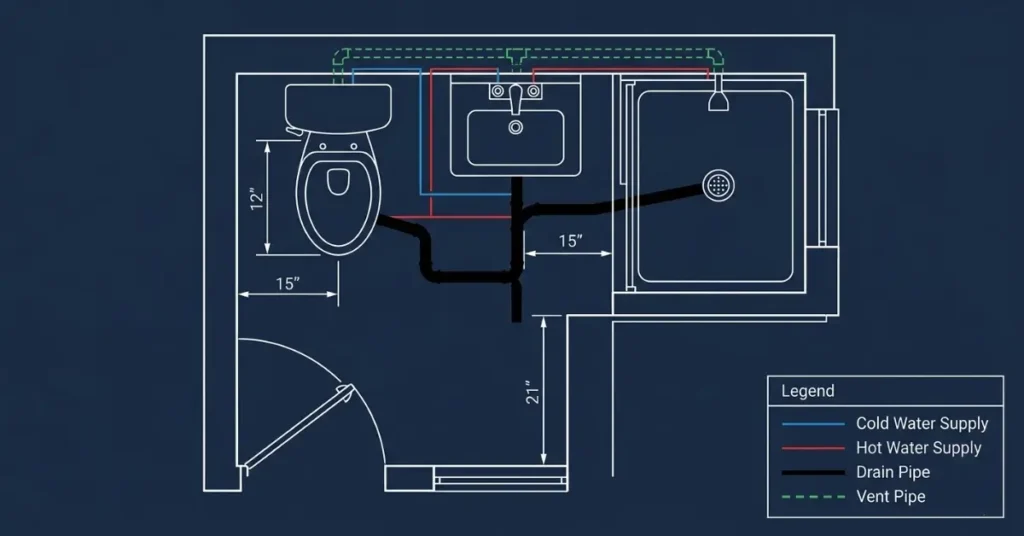
A basement bathroom plumbing diagram shows your entire system from above. It looks like a simple map. It shows where every pipe, pump, drain, and fixture sits before any work begins. These diagrams help contractors and homeowners stay on the same page throughout the project.
Reading a Basement Bathroom Layout Diagram
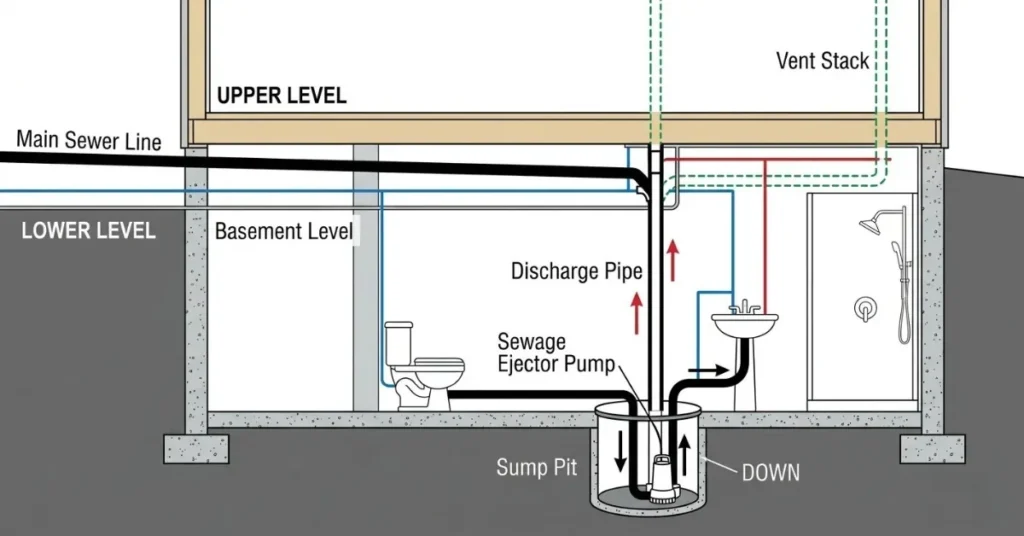
Every basement bathroom plumbing layout must clearly show four things. First, the sewage ejector pump location. Second, the sump pit position in the floor. Third, the discharge pipe route going upward. Fourth, the vent pipe rising through the roof. Blue lines show cold water supply. Red lines show hot water supply. Thick black lines show all drain pipes flowing into the sump pit. Our bathroom plumbing diagram guide explains every symbol in simple detail.
Key Diagram Elements for Below-Grade Bathrooms
Your diagram must show all floor penetrations where pipes pass through the concrete slab. Every horizontal drain pipe must slope at least one-quarter inch per foot toward the sump pit. The IPC requires this slope on all horizontal drain lines. A backwater valve must also appear on your diagram where the main drain exits the basement.
Basement Bathroom Rough-In Plumbing
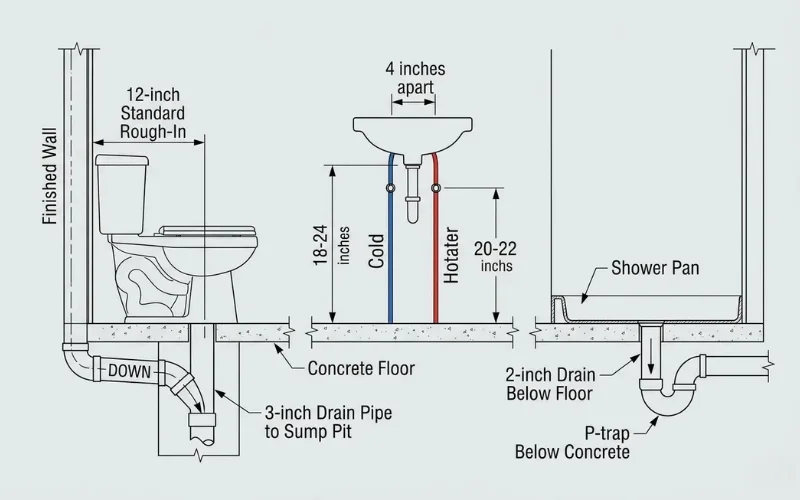
Basement bathroom rough plumbing means positioning all pipes before any finishing work happens. Getting measurements right the first time saves you from tearing out expensive tile or drywall later. This is the most critical phase of any basement bathroom project.
Toilet Rough-In Measurements for Basement
The toilet rough-in distance is the same in a basement as anywhere else in your home. Most American toilets need a 12-inch rough-in from the finished wall to the center of the drain. Some older homes in Philadelphia and Boston use a 14-inch rough-in instead. The toilet drain must be a minimum 3-inch pipe according to IPC standards. This pipe connects to the sump pit below rather than flowing directly to the sewer.
Sink and Shower Rough-In in Basement
Basement bathroom sink plumbing centers the drain pipe between 18 and 24 inches above the finished floor. Hot and cold supply lines rough in at 20 to 22 inches high, about 4 inches apart. Basement bathroom shower plumbing needs the drain connected to a 2-inch pipe below the shower pan. The P-trap sits below the concrete floor, which is why breaking concrete is often necessary for showers.
Drain Pipe Sizing for Basement Fixtures
Every fixture needs the correct pipe size. Sinks use 1.5-inch drain pipes. Showers and tubs use 2-inch drain pipes. Toilets need 3-inch drain pipes. The American Society of Plumbing Engineers (ASPE) recommends Schedule 40 PVC for all basement drain lines. The main collection pipe running to the sump pit should be at least 3 inches to handle full flow from all fixtures at once.
Basement Bathroom Ejector Pump Guide
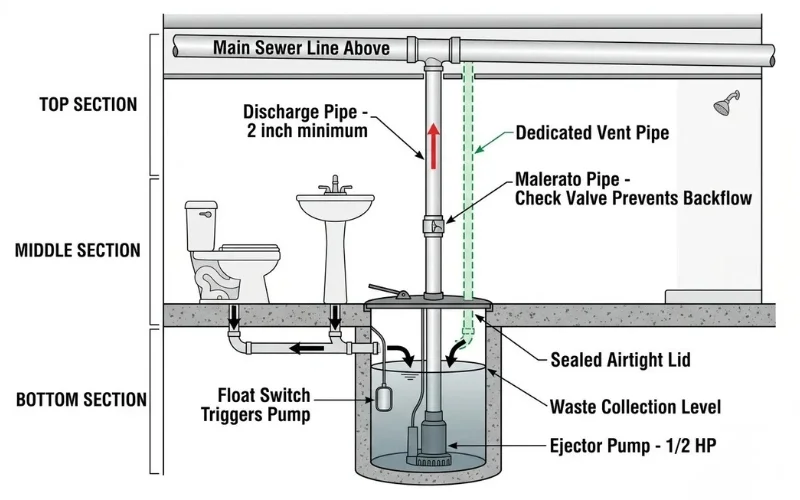
A sewage ejector pump is the most important part of any basement bathroom plumbing system. Without it, waste simply cannot travel upward to the main sewer line above.
How a Sewage Ejector Pump Works
All waste from your basement toilet, sink, and shower flows down by gravity into a sealed sump pit in the concrete floor. When waste reaches a set level, a float switch triggers the pump automatically. The pump grinds solid waste and pushes everything up through a discharge pipe to the main sewer line above the basement ceiling. A check valve on the discharge pipe stops waste from flowing backward when the pump shuts off. The sump pit must have an airtight lid to block sewer gases from entering your basement.
Ejector Pump Installation Requirements
The IPC requires the sump pit to be at least 18 inches wide and 24 inches deep. The discharge pipe must be at least 2 inches in diameter. A standard home ejector pump runs on a half horsepower motor. This size handles a full basement bathroom with toilet, sink, and shower without any problems. Homeowners in Chicago, Philadelphia, and Denver use these systems regularly because basements are so common in these northern cities.
Ejector Pump Maintenance Tips
A good ejector pump lasts 7 to 10 years with basic care. Check the float switch every six months. Never flush wipes or paper towels down a basement toilet. These items clog the pump fast. According to HomeAdvisor, replacing a failed ejector pump costs between $600 and $1,800 including labor.
Basement Bathroom Plumbing Vent Systems
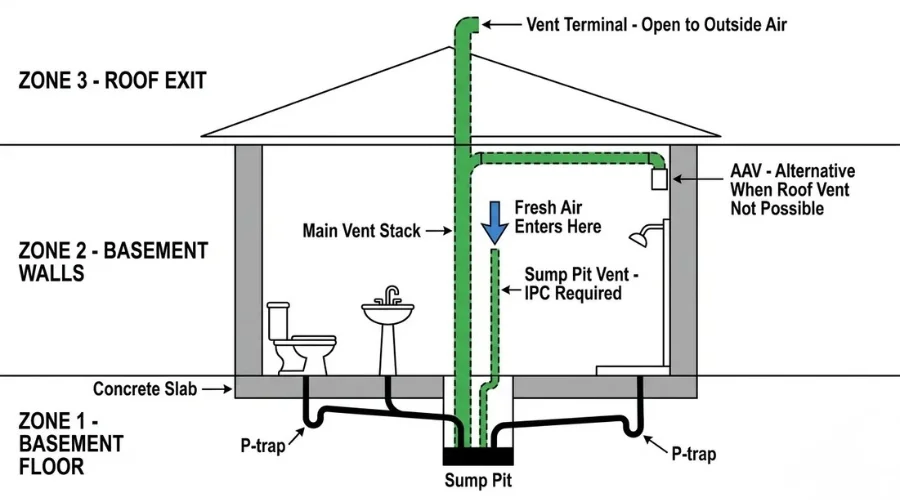
Venting is just as important in a basement bathroom as it is anywhere in your home. Without proper venting, your drains will gurgle, run slowly, and allow dangerous sewer gases to enter your living space.
Venting Requirements for Below-Grade Bathrooms
Every basement bathroom fixture needs a vent connection. According to IPC Chapter 9, each fixture must maintain a water seal inside its P-trap. Without a vent, flowing water creates a vacuum that sucks water out of the P-trap. Once the P-trap loses its water seal, sewer gases enter freely. The main vent stack must rise from the basement all the way through the roof. The sump pit also needs its own dedicated vent pipe rising to the outside. The American Society of Plumbing Engineers (ASPE) recommends a minimum 2-inch vent pipe for basement bathroom groups.
Air Admittance Valves in Basement Bathrooms
Some basement remodels use an air admittance valve, called an AAV, when running a vent pipe through the roof is not possible. An AAV opens to let air in when water drains and closes to block sewer gases. The Uniform Plumbing Code (UPC), used in California and Oregon, has stricter rules about AAVs than the IPC does. Always check with your local building department before installing an AAV in any basement bathroom.
Basement Bathroom Plumbing Without Breaking Concrete
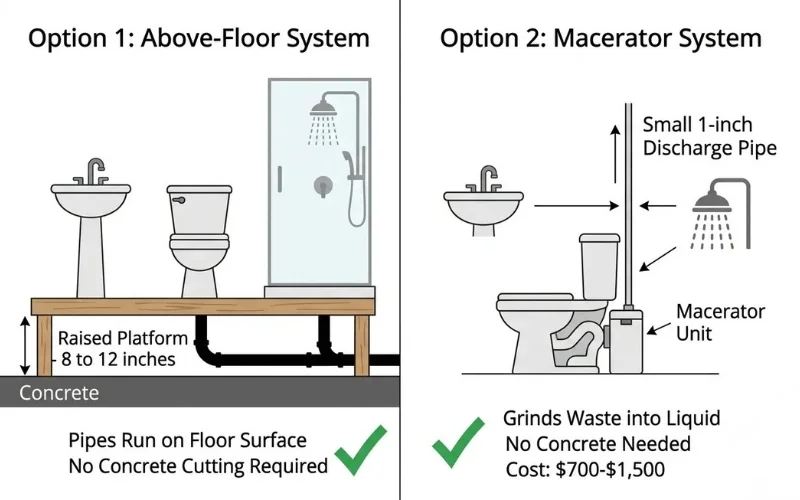
Many homeowners want to add a basement bathroom without breaking concrete. The good news is that modern systems make this possible. You have two main options to consider.
Above-Floor Plumbing Systems
Above-floor plumbing systems run all drain pipes along the surface of the basement floor. The toilet, sink, and shower sit on a raised platform built over the pipes. Everything connects to a compact pump unit mounted on the floor. No concrete cutting is needed at all. This is very popular in cities like New York and Chicago where basement renovations happen frequently. The main downside is the raised platform, which adds 8 to 12 inches of height to your bathroom floor.
Macerator Toilet Systems
A macerator toilet system is another way to avoid breaking concrete in basement bathroom plumbing without breaking concrete. These units attach behind the toilet and grind waste into liquid before pumping it through a small 1-inch discharge pipe. The same unit handles sink and shower waste through extra inlet connections. According to Angi, macerator systems cost between $700 and $1,500 for the unit alone. They work well for guest bathrooms but are not ideal for heavy daily use because the grinding parts wear out faster.
Basement Bathroom Plumbing Costs
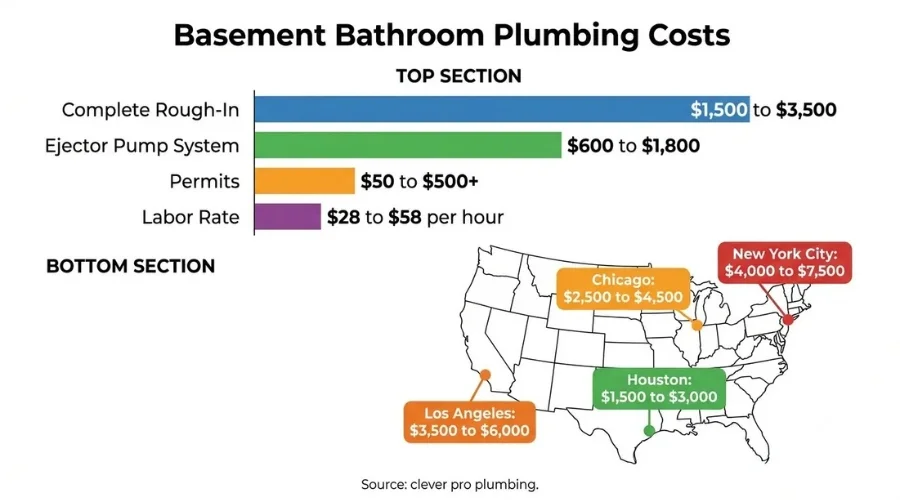
Knowing typical costs helps you plan your budget and avoid overpaying. The cost to finish a basement bathroom with rough in plumbing varies widely depending on your location and project complexity.
National Average Basement Plumbing Costs
According to HomeAdvisor, complete basement bathroom plumbing rough-in costs between $1,500 and $3,500 nationally. This covers labor and materials for a standard three-piece bathroom. Adding a sewage ejector pump adds $600 to $1,800 on top of that total.
How Much Does It Cost to Plumb a Basement Bathroom
Bureau of Labor Statistics data shows licensed plumbers earn between $28 and $58 per hour across the United States. Permit fees add $50 in states like Texas and over $500 in California. New York City homeowners pay the most, with full basement bathroom plumbing projects averaging $4,000 to $7,500. Houston homeowners pay significantly less, averaging $1,500 to $3,000 for similar work. Always get three quotes from contractors affiliated with the Plumbing-Heating-Cooling Contractors Association (PHCC) before hiring anyone.
Basement Bathroom Plumbing Codes and Permits
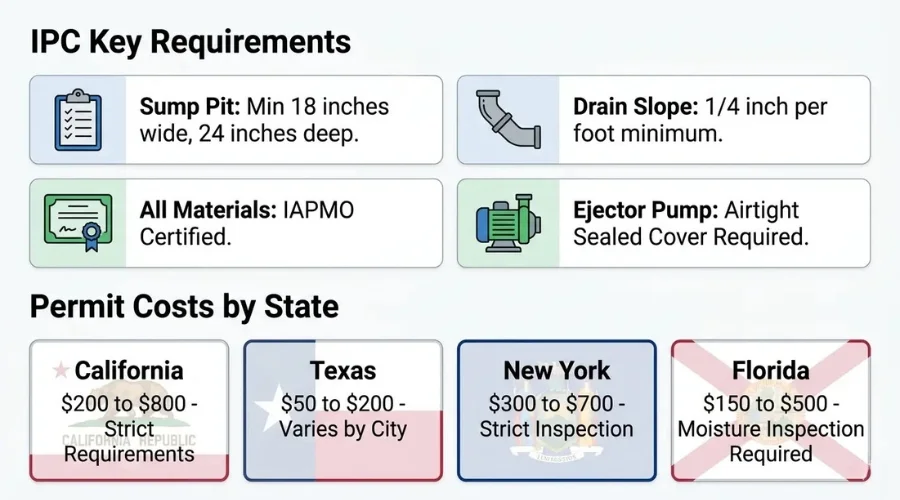
Every basement bathroom project needs permits. Skipping permits creates big problems when you try to sell your home later. Inspectors will flag unpermitted work and your buyer’s bank may refuse to finance the purchase.
IPC Requirements for Basement Bathrooms
The International Plumbing Code (IPC) sets the rules for all basement bathroom installations. Ejector pumps must sit in properly sized sump pits with airtight covers. All drain pipes must slope at least one-quarter inch per foot. IAPMO certifies all plumbing materials to ensure they meet these code standards before installation begins.
Permit Requirements by State
California requires permits for all plumbing work beyond minor repairs. Fees run from $200 to $800 depending on project size. New York has strict inspection requirements for basement plumbing due to older sewer infrastructure throughout the state. Texas permit fees run between $50 and $200 but vary by city. Florida requires extra moisture and waterproofing inspections for all below-grade bathroom installations in addition to standard plumbing permits.
Frequently Asked Questions
Do I need an ejector pump for a basement bathroom?
Yes in most cases. If your basement sits below the main sewer line, an ejector pump is required by IPC standards. Only basements that sit above the sewer connection can use standard gravity drainage without a pump.
How much does basement bathroom plumbing cost?
According to HomeAdvisor, costs run between $1,500 and $3,500 nationally. Adding an ejector pump adds $600 to $1,800. New York City averages $4,000 to $7,500 while Houston averages $1,500 to $3,000.
Can I add a basement bathroom without breaking concrete?
Yes. Above-floor plumbing systems and macerator toilet systems both allow complete basement bathrooms with zero concrete demolition. These systems require a raised platform adding 8 to 12 inches to your floor height.
What size pipes do I need for basement bathroom plumbing?
Sinks need 1.5-inch drain pipes. Showers and tubs need 2-inch pipes. Toilets need 3-inch drain pipes per IPC requirements. Supply lines use half-inch pipes for fixtures and three-quarter inch for the main supply line.
Do I need a permit for basement bathroom plumbing?
Yes in almost every American city and state. Fees range from $50 in Texas to over $500 in California. Never skip permits because unpermitted work causes serious problems during home sales.
How deep does a basement bathroom drain need to be?
The ejector pump sump pit must be at least 18 inches wide and 24 inches deep per IPC standards. Individual drain pipes must maintain a one-quarter inch per foot slope toward the sump pit.
Conclusion
Basement bathroom plumbing is a big project but very manageable with the right planning. Understanding ejector pumps, rough-in measurements, venting, and permit requirements puts you ahead before any work begins. For a complete look at how all bathroom plumbing systems work together, explore our detailed bathroom plumbing guide. Always hire a licensed plumber who follows International Plumbing Code standards. A properly permitted and inspected basement bathroom adds real lasting value to your American home.