Methods at a Glance
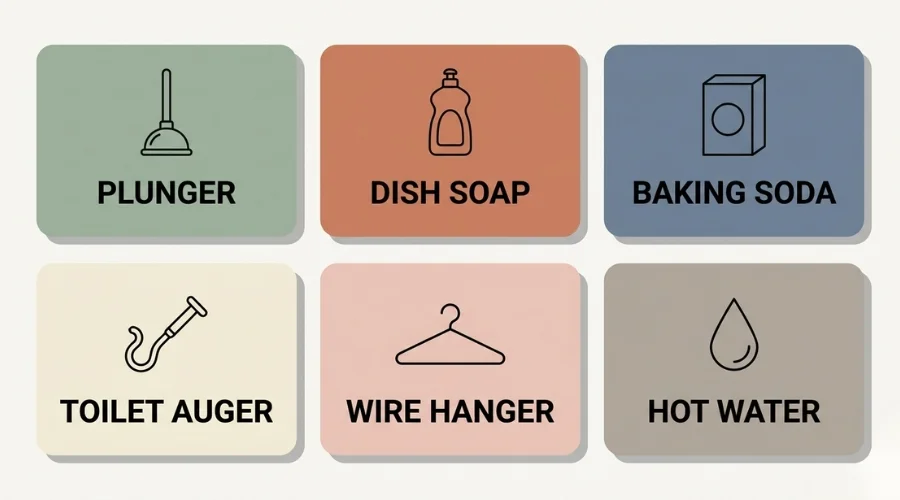
| Method | Time Needed | Difficulty | Best For | Tools Required? |
| Plunger | 5,10 min | Easy | Most clogs | Yes (flange plunger) |
| Dish soap + hot water | 20,30 min | Very Easy | Soft/organic clogs | No |
| Baking soda + vinegar | 30,60 min | Very Easy | Mild clogs | No |
| Toilet snake / auger | 10,15 min | Moderate | Stubborn clogs | Yes (auger) |
| Wire hanger | 10,15 min | Easy | No tools available | No |
| Hot water alone | 15,20 min | Very Easy | Minor clogs | No |
| Call a plumber | Varies | N/A | Everything else | N/A |
You hear the water rising instead of draining. The bowl fills higher, your stomach drops, and you freeze. It’s one of the most stressful household moments, and it almost always happens at the worst possible time.
Here’s what you need to know right now: most toilet clogs can be fixed in under 30 minutes without calling a plumber. Knowing how to unclog a toilet fast, using the right method for your situation, is the difference between a five minute fix and a flooded bathroom floor.
Will a toilet unclog itself? In rare cases involving minor toilet paper buildup, yes, but most clogs will not clear on their own, and waiting makes them significantly worse. Don’t wait. Act now.
This guide covers 7 proven methods to unclog a toilet, from the easiest tricks using household items you already own, to advanced techniques for the most stubborn blockages. Whether you have a plunger or not, whether there’s poop in the bowl, whether it’s an RV toilet, you’ll find the right solution here, ranked from simplest to most advanced.
Before You Start: How to Stop a Toilet From Overflowing
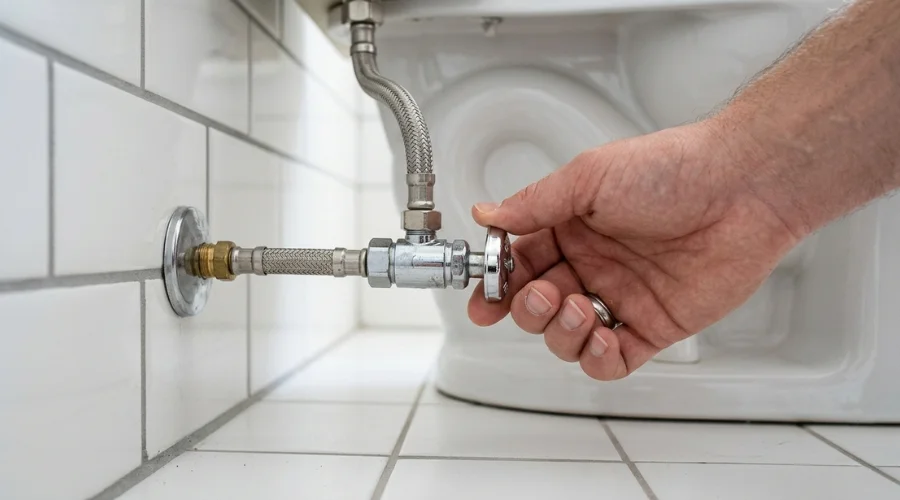
Before you try any unclogging method, your first job is damage control. A toilet that’s already overflowing, or close to it, needs to be stopped immediately.
Warning: Do not flush again. Flushing a second time is the single most common mistake people make. It will push more water into an already blocked bowl and dramatically increase the risk of overflow and water damage to your floor.
Follow these three steps in order:
- Lift the tank lid (the rectangular cover at the back of the toilet) and set it safely aside. Inside, you’ll see a rubber disc connected to a chain, this is the flapper. Push it down firmly with your hand to block water from flowing into the bowl. This stops the fill cycle immediately.
- Turn off the water supply valve. Look for a small oval or football shaped valve on the wall or floor directly behind the toilet. Turn it clockwise until it stops. This fully cuts the water supply to the toilet and prevents any further filling.
- Protect your floor. Lay old towels or newspapers around the base of the toilet before attempting any method. Water splashes during plunging and pouring, protecting the floor now prevents water damage and slip hazards.
Once overflow is under control, choose your method below.
How to Unclog a Toilet with a Plunger (The Right Way)
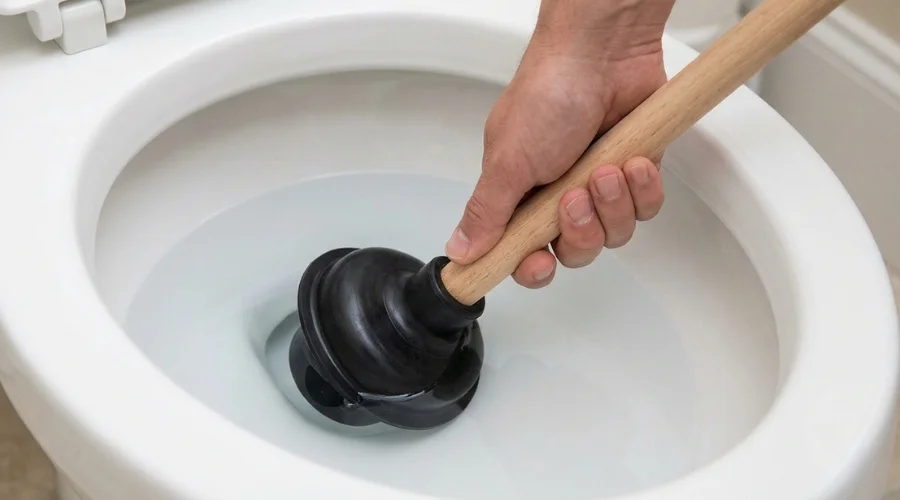
The plunger is the most effective first response for toilet clogging, but only when you’re using the right type and the correct technique. Most people use the wrong plunger and wonder why it doesn’t work.
There are two types of plungers. A cup plunger, the basic red rubber dome, is designed for flat drains like sinks and bathtubs. It creates a poor seal in a toilet’s curved drain opening. What you need is a flange plunger, which has an extended rubber collar (the flange) that fits directly into the toilet drain opening and creates a proper airtight seal. If your plunger doesn’t have this flange, it’s the wrong tool for a toilet.
Before plunging, check the water level in the bowl. The plunger cup must be fully submerged in water to work, if the water level is too low, add water from the sink using a bucket or cup until the cup is covered.
Step by step plunging technique:
- Lower the flange plunger into the bowl at a slight diagonal angle, this lets the cup fill with water rather than trap air inside it
- Press the flange down into the drain opening until you have a complete, airtight seal, no gaps around the edges
- Give one gentle push first to expel any trapped air without splashing
- Begin the push pull motion, push down firmly, then pull back up with equal force; the upward pull creates suction that loosens the clog just as much as the downward push
- Complete 10 to 15 vigorous push pull strokes without breaking the seal
- On the final stroke, pull the plunger sharply away from the drain to release the suction
- Watch if the water drains, if it does, flush once to confirm the clog is clear
- Repeat 3 to 4 full cycles if needed
Most clogs respond to correct plunging within 5 to 10 minutes. If you’ve been plunging for more than 10 minutes without progress, the issue isn’t your technique, the clog itself is the problem.
What to Do When the Plunger Isn’t Working
If the plunger isn’t clearing the clog, the reason is almost always one of three things: you’re using a cup plunger instead of a flange plunger, you’re not achieving a proper airtight seal, or the clog is positioned too deep in the drainpipe for the plunger to reach.
Here’s the escalation path when a plunger doesn’t work:
- After 10 minutes of failed plunging: move to the dish soap and hot water method
- If soap method also fails: move to the toilet snake / auger
- If the snake also fails: the blockage is likely deeper than the toilet trap, further down the drainpipe
One critical signal to watch for: if your sink, shower, or bathtub drains are also slow at the same time your toilet is clogged, the problem is not in your toilet at all. It’s in your main sewer line. No household method can reach a main sewer line blockage, that requires a professional with specialized equipment.
How to Unclog a Toilet Without a Plunger: 4 Methods That Work
Most people don’t own a flange plunger, or if they do, it’s in a different bathroom at exactly the wrong moment. The good news is that 4 household methods can unclog a toilet without any specialized tools. Choose based on how much time you have: the dish soap method is fastest, the baking soda method needs more waiting time but is highly effective on organic clogs.
Method 1: Dish Soap and Hot Water (Best No-Plunger Method)
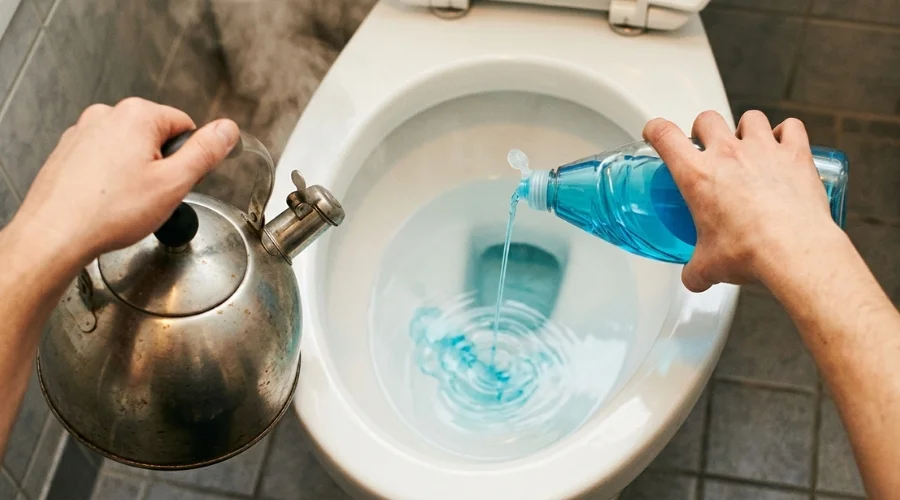
Dish soap for unclogging a toilet is the most effective no plunger household method available, and it works through a simple mechanism: the surfactant molecules in liquid dish soap break the surface tension between the clog and the pipe wall, lubricating the drain and coating the obstruction so it slides through more easily.
What you need: 1/4 to 1/2 cup of liquid dish soap (Dawn, Fairy, or any dish detergent works), plus a pot or bucket of hot water.
Steps:
- Pour 1/4 to 1/2 cup of liquid dish soap directly into the toilet bowl, aiming for the drain opening
- Fill a pot or bucket with the hottest tap water available, hot, not boiling; boiling water creates thermal shock that can crack the porcelain bowl
- Pour the hot water into the bowl from waist height, the height adds gentle gravitational pressure to help push the soap toward the clog
- Wait 20 to 30 minutes, set a timer and leave it alone; the soap needs time to work its way around and through the obstruction
- After waiting, attempt a single slow flush; if the water drains, the clog is clear
- If partially successful, repeat with a fresh application of dish soap and hot water
Time estimate: 25 to 35 minutes (mostly waiting). Difficulty: Very Easy.
Pro tip: Dawn dish soap works fastest due to its higher surfactant concentration. Hand soap, shampoo, or body wash can substitute in a pinch, but they take longer and require more product.
Method 2: Baking Soda and Vinegar to Unclog a Toilet
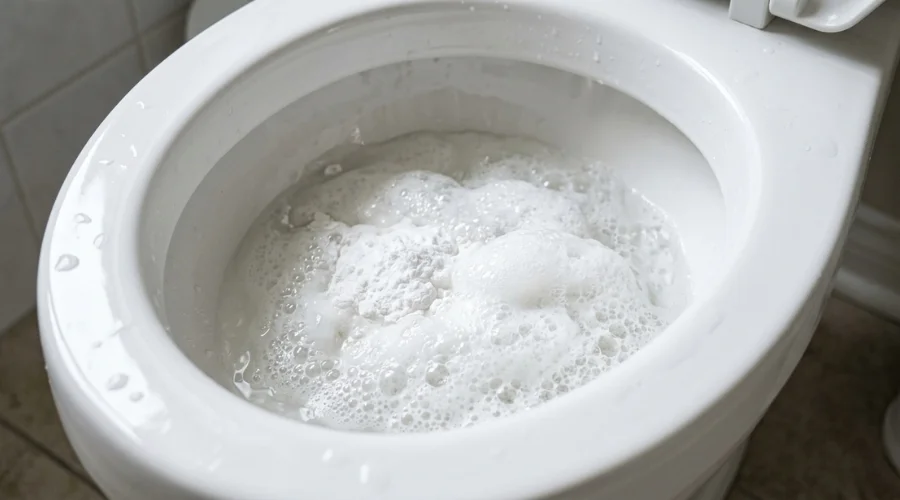
Baking soda and white vinegar create a CO2 fizzing reaction when combined, this carbonation generates pressure inside the drain that helps mechanically loosen organic clogs, while the mild acidity of the vinegar breaks down soft material.
What you need: 1 cup baking soda (sodium bicarbonate) plus 2 cups white distilled vinegar.
Steps:
- Pour baking soda first, add 1 full cup directly into the toilet bowl, aiming for the drain; don’t stir
- Add white vinegar slowly, pour 2 cups in gradually to control the fizz; pouring too fast causes rapid overflow of the foam
- The mixture will bubble and fizz, this is the reaction working; let it fully develop
- Wait 30 to 60 minutes; for a severely clogged toilet, let it sit overnight for maximum effect
- Follow with a pot of hot (not boiling) water to flush the loosened debris through the drain
- Flush once to test
Honest limitation: Baking soda and vinegar work reliably on soft organic clogs, toilet paper buildup, waste, but have limited effect on hard solid obstructions. If the clog doesn’t budge after one cycle, move to the toilet snake.
Time estimate: 35 to 65 minutes. Difficulty: Very Easy.
Method 3: Hot Water Alone (When You Have Nothing Else)
When you have absolutely no other options, hot water alone can shift a minor clog through hydrostatic pressure.
Steps:
- Fill a bucket with the hottest tap water available
- Pour slowly and steadily from waist height, this height creates gravitational momentum
- Fill the bowl to within one inch of the rim, the volume of water creates hydrostatic pressure on the clog
- Wait 10 to 15 minutes before attempting to flush
- Repeat once if needed
Honest caveat: This is the least effective standalone method. It works on minor toilet paper buildup but rarely moves a solid obstruction. Use it when you have nothing else available, or combine it with dish soap for better results.
Method 4: Wire Hanger or Toilet Brush as a DIY Snake
For near surface clogs, obstructions you can almost reach, a straightened wire coat hanger or a toilet brush handle can act as a basic manual snake.
Steps:
- Straighten a wire coat hanger completely, leaving a small hook at one end
- Wrap the tip thoroughly with cloth or tape to protect the porcelain bowl from scratching, bare metal will permanently damage the surface
- Insert the wrapped end gently into the drain opening and rotate slowly to hook or break up the obstruction
- Alternatively, flip a toilet brush upside down and insert the handle end into the drain, using it like a short plunger
Important: If you cannot feel the obstruction within 6 inches of the drain opening, this method won’t reach it. Stop and move to a real toilet auger. Forcing a wire hanger deeper into the drainpipe risks scratching the trap and creating permanent damage.
How to Unclog a Toilet with Poop in It
This is the most common type of urgent toilet clog, and there’s no need for embarrassment, it’s simply a matter of excess waste and toilet paper overwhelming the toilet trap at once.
Here’s why it happens: the toilet trap, the curved section of pipe built into the base of the toilet, is designed to hold a small amount of water as a seal against sewer gases. When a large amount of waste and toilet paper enters together, the trap can’t clear fast enough and the siphon action that normally empties the bowl fails to engage.
The most effective sequence for this specific scenario:
- First: dish soap + hot water, the surfactant in dish soap is particularly effective at lubricating organic waste; pour 1/2 cup of dish soap followed by a pot of hot water, wait 20 to 30 minutes
- If that fails: baking soda + vinegar, add 1 cup baking soda followed by 2 cups white vinegar; the CO2 reaction helps break down organic matter; wait 30 minutes
- If still stuck: flange plunger with vigorous technique, at this point the soap has likely softened the obstruction enough for plunging to finish the job
- Final resort: toilet auger, if all three previous methods fail, the clog is too solid or too deep for household methods
What dissolves poop in a toilet? Dish soap combined with hot water is the fastest household solution, it coats and lubricates waste material. Enzymatic drain cleaners (Bio Clean, Green Gobbler) are the safest chemical option; they use natural bacteria to digest organic waste without damaging pipes.
Do NOT use bleach or chemical drain cleaners like Drano on an organic waste clog. They generate heat and caustic reactions that rarely dissolve solid waste and leave a dangerous pool of chemicals that makes manual unclogging hazardous afterward.
Time estimate for this scenario: Plan for 30 to 45 minutes.
How to Use a Toilet Snake (Auger) for Severely Clogged Toilets
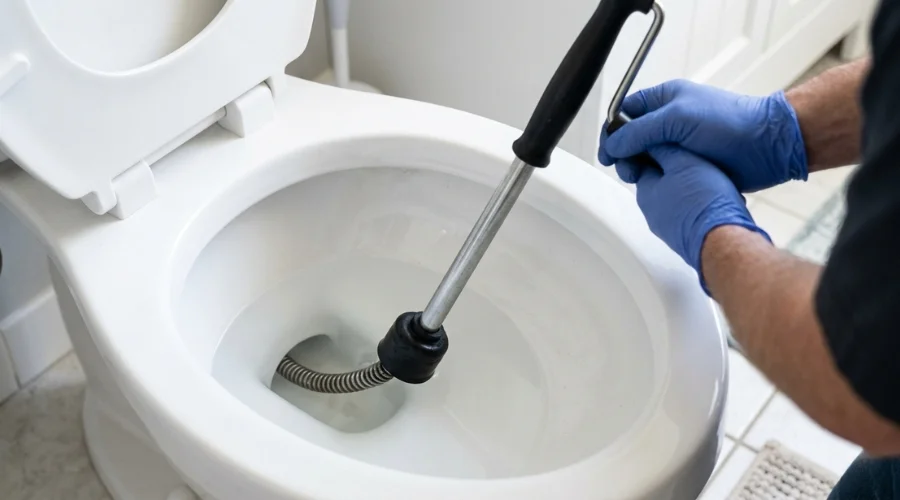
A toilet auger, also called a closet auger or plumbing snake, is a hand operated tool with a flexible metal cable that extends into the drainpipe to physically break up or retrieve an obstruction. It’s the most powerful DIY tool available for a severely clogged toilet.
Critical distinction: A toilet auger is different from a standard drain snake designed for sinks. A toilet auger has a rubber-coated cable and a protective sleeve at the entry point, this sleeve prevents the metal cable from contacting and scratching the porcelain bowl. Using a standard sink drain snake in a toilet will permanently scratch the surface. Always use a purpose built toilet auger.
When should you use a toilet auger? When a plunger has failed after 3 or more attempts, and household methods haven’t cleared the clog within an hour.
Step by step toilet auger usage:
- Insert the rubber-coated end into the drain opening, press the protective sleeve firmly against the porcelain so no metal contacts the bowl
- Turn the handle clockwise while applying gentle forward pressure, this extends the cable deeper into the drainpipe
- Continue turning until you feel resistance, this indicates you’ve reached the clog, typically 3 to 6 feet into the drainpipe
- Maintain clockwise rotation with gentle pressure to either break the clog into smaller pieces, or hook into it to pull it out
- Once you feel the resistance decrease, turn the handle counter clockwise and slowly retract the cable; any material hooked onto the cable will come out with it; dispose of this properly
- Flush to test, repeat if the drain is still slow
Time estimate: 10 to 20 minutes. Difficulty: Moderate.
A quality toilet auger costs $20 to $50 at any hardware store and is one of the most useful tools a homeowner can own. If you experience toilet clogs more than twice a year, it’s worth having one on hand.
Can You Use Chemicals or Bleach to Unclog a Toilet?
Can bleach unclog a toilet? No. Bleach is a disinfectant, it kills bacteria and whitens surfaces, but it has no chemical mechanism to dissolve or break apart the physical material causing a toilet blockage. Pouring bleach into a clogged toilet will disinfect the water sitting in the bowl and accomplish nothing else.
What about products like Drano or Liquid Plumr? These chemical drain cleaners are formulated for sink and shower drains, which have a fundamentally different geometry than a toilet trap. In a toilet, they sit in the standing water rather than contacting the clog effectively. More importantly, they carry serious risks:
- They can corrode and weaken PVC pipes and older metal drainpipes with repeated use
- The heat they generate can, in rare cases, crack porcelain
- If they fail to clear the clog, they create a pool of caustic, toxic liquid in the bowl, making any manual follow up dangerous
- They release harmful fumes in an enclosed bathroom space
The safest chemical option is an enzymatic drain cleaner such as Bio Clean or Green Gobbler Enzyme Drain Cleaner. These products use natural, non toxic bacteria to digest organic waste material safely. They’re safe for porcelain, safe for all pipe types, and safe for the environment. Note that enzymatic cleaners work slowly, they’re best used as a monthly preventive treatment rather than an emergency fix.
| Product | Safe for Toilets? | Effective on Clogs? | Best Use |
| Bleach | Yes (disinfects only) | No | Cleaning, not unclogging |
| Drano / Liquid Plumr | Not recommended | Rarely | Sink drains only |
| Enzymatic cleaner | Yes | Moderate | Organic clogs / prevention |
| Dish soap | Yes | Yes | Emergency clog |
How to Unclog an RV or Camper Toilet (Different Rules Apply)
RV and camper toilets operate on completely different plumbing principles than residential toilets, and applying standard household unclogging methods to them can cause serious damage.
Key differences from a standard toilet:
- RV toilets use a gravity flush or macerator system rather than a siphon trap, the mechanical flush valve opens a slide at the bottom of the bowl rather than triggering a siphon
- They drain into a holding tank beneath the RV, not into a municipal sewer line, the clog is often at the tank connection point, not in the bowl itself
- The bowl is typically made of plastic, not porcelain, aggressive plunging can crack it or damage the flush valve seal
The correct unclogging sequence for an RV toilet:
- Add a full pot of hot (not boiling) water plus 1/2 cup of dish soap directly into the bowl
- Hold the flush pedal down for 30 full seconds to push the soapy water into the tank connection
- Let sit for 1 to 2 hours, significantly longer than a residential toilet requires
- If a plunger becomes necessary, use only a standard cup plunger with minimal force, never a flange plunger, which can damage the valve seal
- For chemical treatment: Unique RV Digest It enzyme treatment is the industry standard product; it’s formulated specifically for RV holding tank waste and won’t damage seals or sensors
The most common cause of RV toilet clogs is a phenomenon known as a “poop pyramid,” a solid buildup of waste that accumulates when insufficient water is used during flushing. The fix is prevention: always flush with a full bowl of water and hold the pedal down for a full 10 seconds after waste clears.
Prevention: Use only RV safe single ply toilet paper, which is formulated to dissolve rapidly in low water environments.
When Nothing Works: Signs Your Toilet Clog Needs a Plumber
There comes a point where continued DIY attempts stop being productive and start risking additional damage. Knowing when to stop is as important as knowing the methods themselves.
Stop DIY efforts and call a licensed plumber when:
- You’ve attempted a plunger, the dish soap method, baking soda and vinegar, and a toilet auger, and the toilet still won’t drain
- The clog clears but returns within 24 to 48 hours, this signals an unresolved partial blockage
- Multiple drains in your home are draining slowly at the same time (toilet, sink, and shower all affected)
- You hear gurgling sounds from your sink or bathtub when you flush the toilet
- Water backs up into the shower or bathtub when you flush
- There is a persistent sewage smell throughout the home
- You suspect a non organic object, a child’s toy, a “flushable” wipe, a foreign object, is lodged in the drain
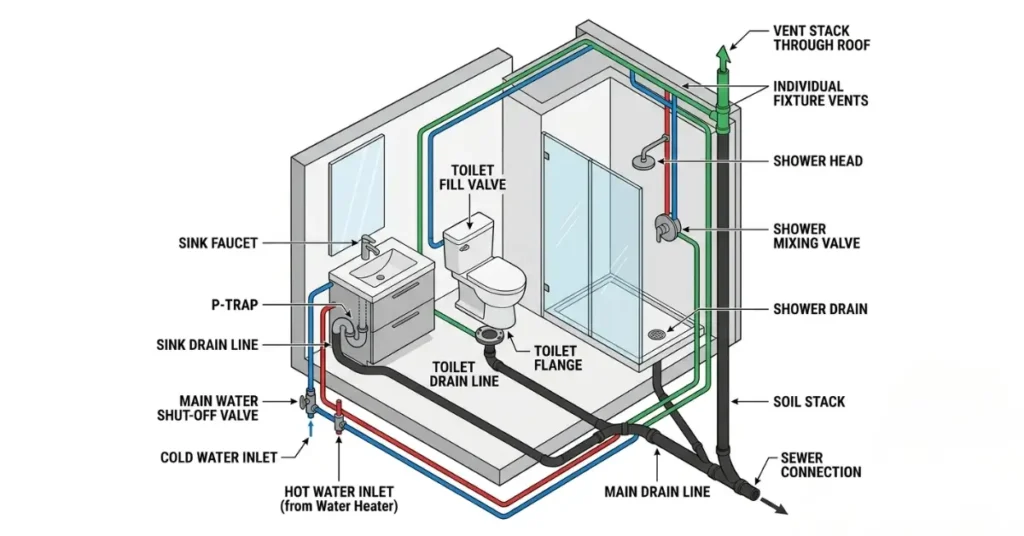
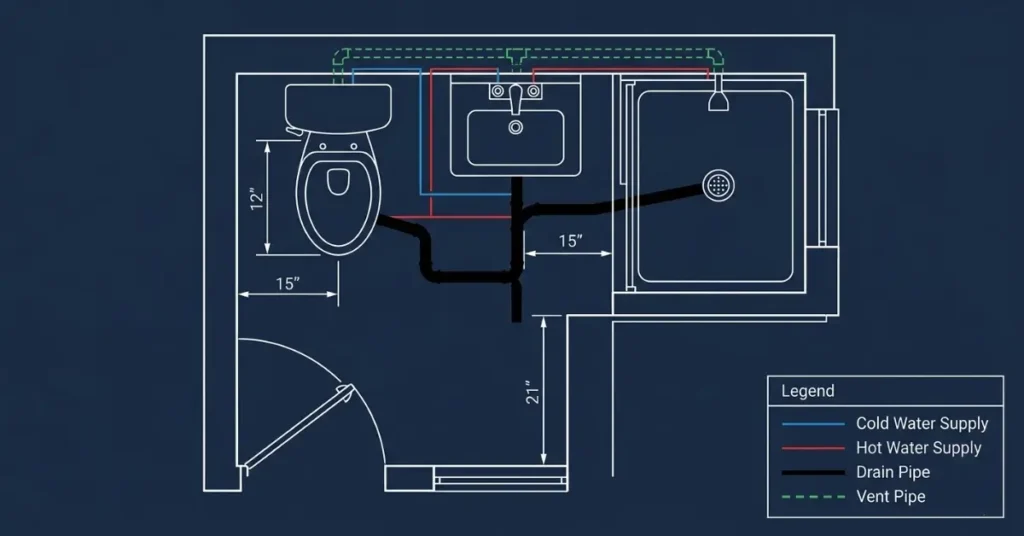
What these signs mean: When multiple fixtures are affected simultaneously, the blockage is in the main sewer line, the large underground pipe that connects your entire home’s plumbing to the municipal sewer. No household tool can reach a main sewer line blockage. A plumber will use a camera inspection to locate the blockage precisely and hydro jetting, a high pressure water system, to clear it completely. To understand how your home’s drainage and venting systems work together, see our complete guide to bathroom plumbing.
Professional toilet unclogging cost breakdown:
| Service | Average Cost (US) |
| Standard toilet unclogging | $100,$275 |
| Toilet snake / auger service | $150,$300 |
| Main sewer line cleaning | $300,$600 |
| Hydro jetting service | $350,$600 |
| Camera inspection | $100,$300 |
According to the American Society of Plumbing Engineers, the average US household experiences 1 to 2 drain related plumbing calls per year. For persistent or recurring clogs, professional intervention is almost always more cost effective than repeated DIY attempts that don’t address the root cause.
How to Prevent Toilet Clogs From Happening Again
The most reliable way to deal with a toilet clog is to prevent one from forming in the first place. Most clogs are entirely avoidable with simple habit changes.
Never flush these items, regardless of what the label says:
- “Flushable” wipes, these are the most misleading product in any bathroom cabinet; they do not break down in water the way toilet paper does, and they are the leading cause of residential and municipal sewer blockages
- Cotton balls, cotton pads, and Q tips
- Feminine hygiene products of any kind
- Paper towels, facial tissues, and napkins, these are engineered not to break apart when wet
- Dental floss, it doesn’t dissolve and tangles around other debris to create dense clogs
- Medications, not a clog risk, but a significant environmental hazard to water supplies
Good flushing habits that prevent buildup:
- Use a reasonable amount of toilet paper; if you use a lot, flush in two stages, once before wiping, once after
- Practice the courtesy flush, a mid movement flush reduces the volume of waste and paper entering the trap at one time, which is the primary cause of organic clogs
- Keep the toilet lid closed when not in use, this prevents small objects, children’s toys, and curious pets from dropping items into the bowl
- Monthly maintenance: pour 1/2 cup of dish soap into the toilet followed by a pot of hot water, let sit for 15 minutes, then flush, this keeps the trap lubricated and prevents soap scum and waste buildup from accumulating on pipe walls
Low flow toilet note: If your toilet clogs repeatedly despite good habits and the toilet was manufactured before 1994, the problem is likely insufficient flush volume. Early low flow models used 1.6 gallons per flush, below the threshold needed to reliably clear the trap. A modern dual flush toilet (0.8 / 1.28 gallons per flush) uses less water but with higher velocity, virtually eliminating chronic clogging.
Frequently Asked Questions About Unclogging a Toilet
Will a toilet unclog itself?
Rarely, and only in very minor cases. If the clog consists of a small amount of toilet paper that hasn’t fully compacted, it may soften and pass through over several hours. However, most toilet clogs, particularly those involving solid waste, large paper volumes, or foreign objects, will not clear without intervention. Waiting typically makes the clog worse as water softens debris that then recompacts more densely.
How do you unclog a toilet without a plunger?
The most effective no plunger method is dish soap and hot water: pour 1/4 to 1/2 cup of liquid dish soap into the bowl, followed by a pot of hot (not boiling) tap water from waist height, and wait 20 to 30 minutes before flushing. If this fails, pour 1 cup of baking soda followed by 2 cups of white vinegar, wait 30 to 60 minutes, then flush with hot water. A wire hanger or toilet brush handle can also manually dislodge near surface clogs.
How long does it take for dish soap to unclog a toilet?
Dish soap typically takes 20 to 30 minutes of contact time to effectively lubricate and loosen a soft toilet clog. For best results, combine it with hot (not boiling) tap water and allow the full waiting period before attempting a flush. Disturbing the bowl before the soap has worked reduces its effectiveness significantly.
Can bleach unclog a toilet?
No. Bleach is a disinfectant, not a drain cleaner. It has no chemical ability to dissolve, break down, or move the physical material causing a toilet blockage. Pouring bleach into a clogged toilet will disinfect the standing water in the bowl and nothing more. For an actual clog, use dish soap, baking soda and vinegar, a plunger, or a toilet auger instead.
What is the best liquid to unclog a toilet?
Dish soap is the best household liquid for unclogging a toilet, it lubricates the drain and coats organic waste so it passes through more easily. For a chemical option, enzymatic drain cleaners (such as Bio Clean or Green Gobbler) are the safest and most effective liquid treatments. Avoid bleach, Drano, and Liquid Plumr, these are not designed for toilet traps and can damage pipes.
How much does it cost to unclog a toilet?
A plumber charges $100 to $275 to unclog a toilet using standard tools. If a toilet snake or auger service is required, expect $150 to $300. If the blockage is in the main sewer line, costs rise to $300 to $600 for professional cleaning and $350 to $600 for hydro jetting. A camera inspection to diagnose the problem costs an additional $100 to $300.
Why is my toilet not unclogging?
The three most common reasons a toilet won’t unclog are: the wrong type of plunger (cup plunger instead of flange plunger), a clog that is too deep for household methods to reach, or a blockage in the main sewer line rather than in the toilet itself. If other drains in your home are also slow, or you hear gurgling from the sink or shower when flushing, the problem is in the main line and requires professional equipment.
How do you unclog a badly clogged toilet?
For a severely clogged toilet, the most effective DIY sequence is: dish soap and hot water first (wait 30 minutes), followed by baking soda and vinegar (wait 30 to 60 minutes), then vigorous plunging with a flange plunger, and finally a toilet auger for anything that remains. If all four methods fail, stop, the clog is beyond the toilet trap and likely requires a professional camera inspection and hydro jetting.
How do you unclog a toilet in 5 minutes?
The fastest method is a flange plunger with correct technique: achieve a full airtight seal, plunge in a vigorous push pull motion for 15 to 20 strokes without breaking the seal, then pull sharply away to release suction. Most soft or moderate clogs will clear within 5 to 10 minutes of correct plunging. A toilet auger can also clear a clog in 10 to 15 minutes for blockages the plunger can’t reach.
How do you unclog an RV toilet?
Pour 1/2 cup of dish soap plus a full pot of hot water into the bowl, then hold the flush pedal down for 30 seconds to push the mixture into the tank connection. Let it sit for 1 to 2 hours. If manual action is needed, use a cup plunger only, never a flange plunger, which can damage the plastic bowl and valve seal. Enzymatic treatments like Unique RV Digest It are the recommended chemical option for RV holding tanks.
Conclusion
Knowing how to unclog a toilet confidently comes down to choosing the right method for the situation and escalating systematically if your first attempt doesn’t work. Start with the easiest option available, dish soap and hot water if you have no tools, a flange plunger if you do, and work your way up to a toilet auger for more stubborn blockages. The 7 methods in this guide cover every realistic scenario, from minor clogs to severely backed up drains.
Two tools worth owning before you need them: a flange plunger ($10,$20) and a toilet auger ($20,$50). Together they handle over 90% of toilet clogs without a plumber.
When DIY methods have all been tried and the clog persists, or when other drains in your home are also affected, it’s time to call a professional. Plumber costs to unclog a toilet typically run $100,$275, and for a main sewer line issue, professional intervention is the only option that actually solves the problem at the source. Knowing when to stop trying and make that call isn’t a failure, it’s the right decision.