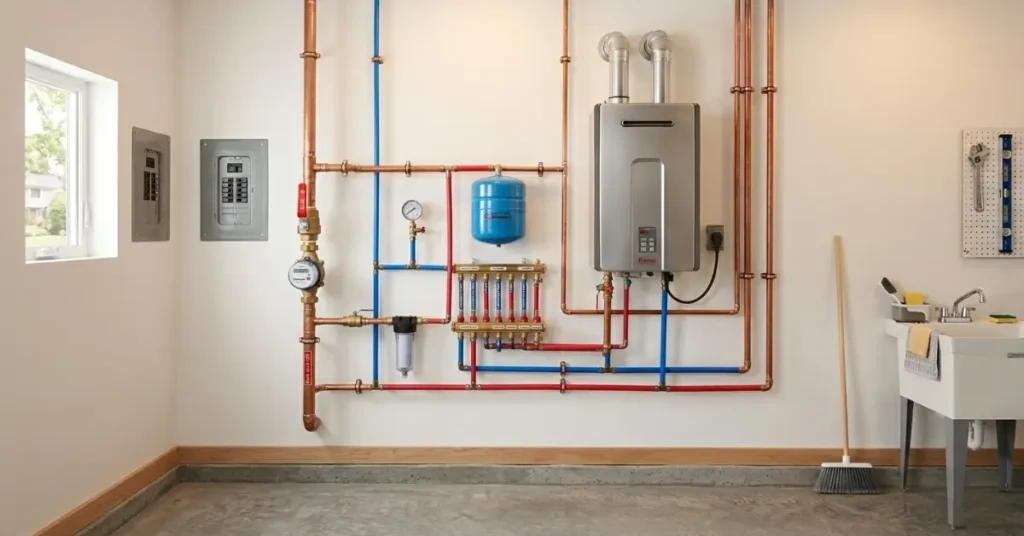
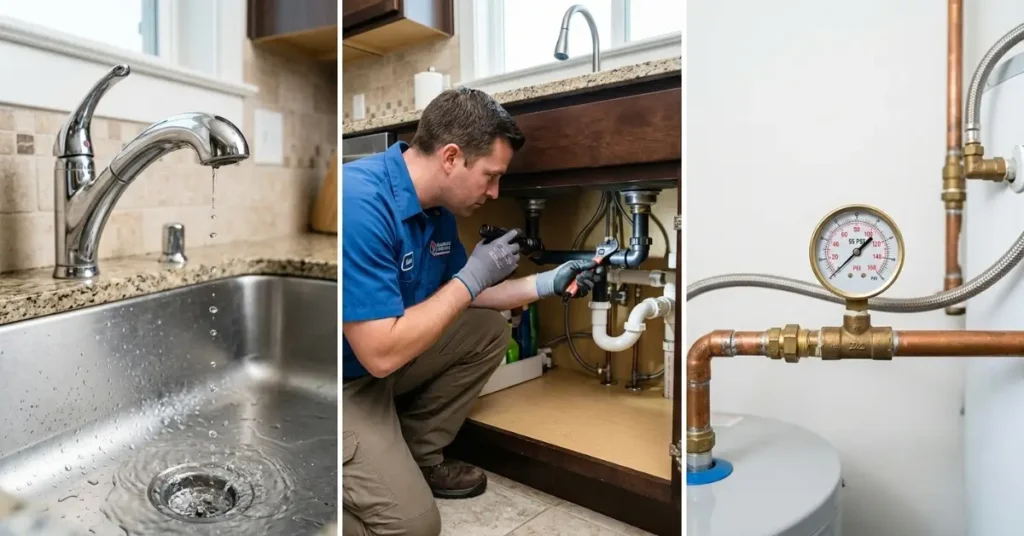
Every year, household plumbing problems cost American homeowners billions of dollars in unexpected repairs and water damage. A dripping faucet that runs all night, a drain that backs up during a family dinner, or a burst pipe that soaks through the ceiling at 3 AM are not rare events. According to the Insurance Institute for Business and Home Safety, plumbing failures are among the leading causes of property damage claims filed across the United States every single year.
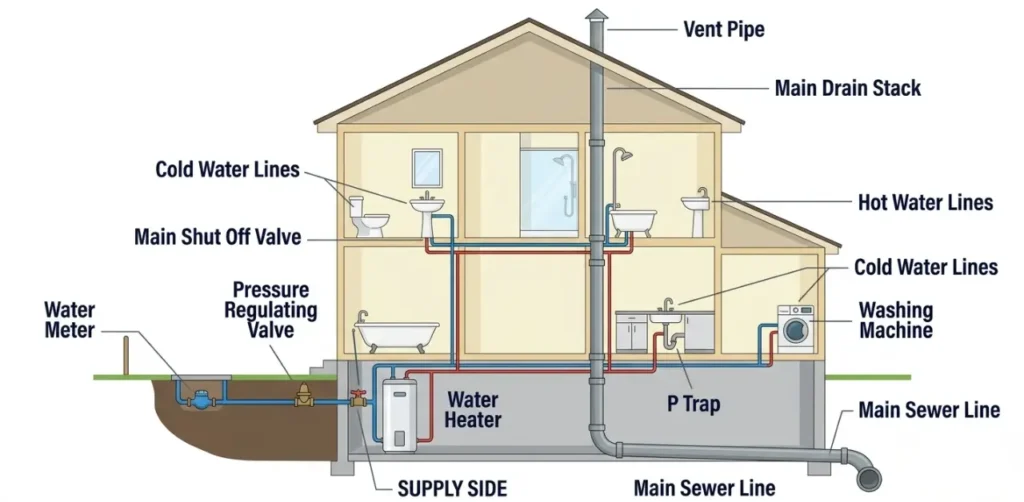
The most common searched plumbing problems are not random. They follow clear patterns that repeat in homes across every state, from older brownstones in New York to newly built subdivisions in Texas. Understanding these patterns gives you the ability to spot a problem before it becomes a disaster, handle minor issues yourself, and know exactly when to call a licensed plumber before the damage gets out of hand. Understanding these patterns gives you the ability to spot a problem before it becomes a disaster by learning how plumbing systems work from supply to drain.
This guide covers every major plumbing problem American homeowners face, what causes them, how to recognize the early warning signs, what they cost to fix, and what you can do right now to prevent them from happening in the first place.
What Are the Most Common Plumbing Problems?
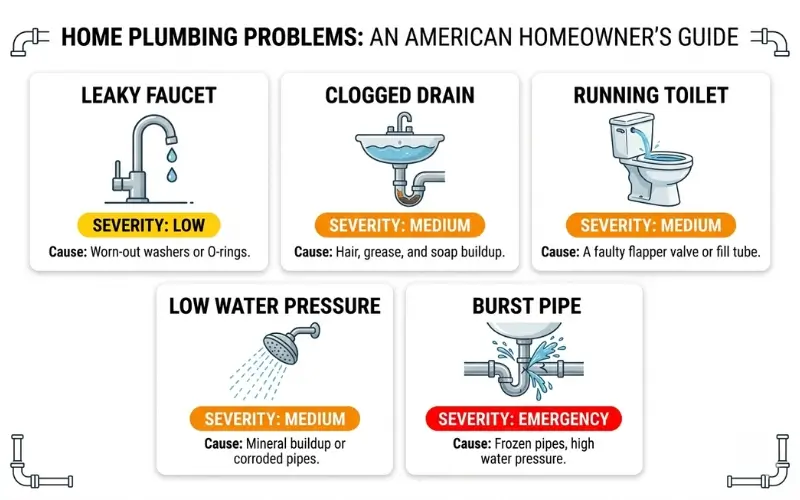
Plumbing faults follow predictable patterns inside American homes. The same issues appear over and over again in apartments in Chicago, ranch homes in Arizona, and colonial houses in Virginia. Understanding what these common plumbing issues are and why they happen is the first step toward protecting your home and your wallet.
The National Association of Home Builders (NAHB) reports that plumbing is one of the top three systems American homeowners spend money maintaining and repairing every single year. The average American household deals with at least one significant plumbing problem every 12 months and many deal with several at the same time without even realizing they are connected.
Here are the most common plumbing problems found in American homes:
Leaky Faucets
The single most reported plumbing complaint across the United States. A worn washer or damaged O ring inside the faucet body allows water to drip continuously even when the handle is fully closed.
Clogged Drains
Kitchen and bathroom drains clog from grease, hair, soap scum, and mineral buildup. A single slow drain points to a localized blockage. Multiple slow drains throughout the house point to a deeper problem in the main line.
Running Toilet
A toilet that keeps running after flushing wastes between 200 and 700 gallons of water per day according to the Water Research Foundation. Most running toilets are caused by a worn flapper valve or a faulty fill valve inside the tank.
Low Water Pressure
Weak flow from faucets and showers is one of the most frustrating general plumbing issues homeowners deal with. It is usually caused by pipe corrosion, a partially closed valve, or a failing pressure regulating valve.
Burst Pipes
Most destructive of all common plumbing problems. A single burst pipe can release hundreds of gallons of water in minutes, causing catastrophic damage to walls, floors, and ceilings.
Water Heater Issues
A water heater that stops producing hot water, leaks from the base, or makes loud rumbling noises affects every person living in the home. Water heater problems rank among the most urgent household plumbing problems American homeowners face.
Sewer Backups
Raw sewage backing up into tubs, toilets, and floor drains is one of the most serious plumbing faults any homeowner can face. It almost always signals a blockage deep in the main sewer line.
Every one of these problems has a cause, a warning sign, and a solution. The sections below break each one down so you know exactly what you are dealing with and what to do about it.
Signs of Plumbing Problems in Your Home
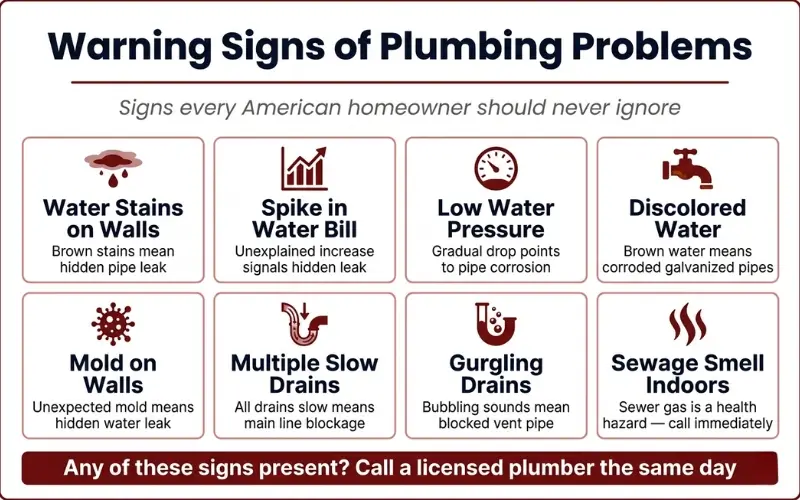
Most plumbing problems do not appear without warning. They leave behind clear signals days, weeks, and sometimes months before they turn into serious plumbing problems that require expensive professional repairs. Learning to read these signals is one of the most valuable skills any American homeowner can develop.
The challenge is that most homeowners only notice plumbing trouble when something dramatic happens, a pipe bursts, a drain overflows, or hot water suddenly stops working. By that point the damage is already done. The early warning signs were there all along but went unnoticed because most people simply do not know what to look for inside their own home.
Warning Signs You Should Never Ignore
Unexplained Water Stains
Brown or yellow water stains appearing on ceilings, walls, or cabinet floors are almost always caused by a slow pipe leak running behind the surface. A water stain that grows over time or feels soft to the touch indicates active water damage happening inside the wall or above the ceiling right now.
Knowing your home plumbing diagram helps you locate the source of hidden leaks much faster than guessing behind walls.
Sudden Spike in Water Bill
Your monthly water bill is one of the most reliable early warning tools available to any homeowner. If your bill jumps significantly without any change in household usage, a hidden leak is almost certainly running somewhere in your plumbing system. The EPA estimates that household leaks waste nearly 1 trillion gallons of water annually across the United States, much of it from leaks homeowners never knew existed.
Persistent Low Water Pressure
A gradual drop in water pressure throughout your home, not just at one fixture, points to a developing problem inside the supply lines. Pipe corrosion, mineral buildup, or a failing pressure regulating valve all cause pressure to drop slowly over time before the problem becomes obvious.
Discolored Water
Brown or rust colored water coming from your faucets signals pipe corrosion inside aging galvanized steel pipes. Yellow or green tinted water can indicate copper pipe corrosion. Either situation means your pipes are deteriorating from the inside and need professional inspection. In states like Michigan, Ohio, and Pennsylvania where older housing stock is common, discolored water is a frequent early warning sign of failing plumbing infrastructure inside the home.
Mold or Mildew on Walls
Mold growing on walls or ceilings that are not near a bathroom or kitchen almost always indicates a hidden water leak behind the surface. The Centers for Disease Control and Prevention (CDC) warns that prolonged mold exposure causes serious respiratory health issues. If you see mold in an unexpected location inside your home, treating the visible mold without finding and fixing the underlying plumbing leak is a waste of time and money.
Slow Drains Throughout the House
A single slow drain in one bathroom is usually a minor localized blockage. When multiple drains throughout the house run slowly at the same time, kitchen sink, bathroom sink, and shower all draining slowly, that pattern points to a developing blockage deep in the main drain line running beneath your home.
Gurgling Sounds from Drains
Gurgling or bubbling sounds coming from drains after water runs down them indicate that air is trapped somewhere in the drainage system. This usually means a partial blockage is forming in the main drain line or a vent pipe is blocked above the roofline. Left unaddressed, gurgling drains almost always turn into completely blocked drains within weeks.
Sewage Smell Inside the Home
Any sewage odor detected inside your living spaces is a serious warning sign that should never be ignored. Sewer gas contains hydrogen sulfide and methane, both dangerous with prolonged exposure. The smell usually means a drain trap has dried out, a vent pipe is cracked, or a sewer line is damaged somewhere beneath the property.
When Signs Mean Emergency
Some warning signs cross the line from schedule a repair into call an emergency plumber right now. Knowing the difference between a non urgent warning sign and a genuine plumbing emergency can save your home from catastrophic water damage.
Call an emergency plumber immediately if you notice any of these situations. Water actively spraying or pouring from a pipe inside your home requires turning off the main shut off valve and calling for help right away. Sewage backing up into multiple fixtures at the same time, especially if raw sewage appears in a bathtub or on a floor drain, means the main sewer line is completely blocked and wastewater has nowhere to go. A sudden complete loss of water pressure throughout the entire house with no known cause can indicate a main line break either inside the home or underground between the meter and the foundation. Any gas smell combined with a plumbing issue near a gas water heater requires leaving the home immediately and calling both the gas company and an emergency plumber from outside the building.
Leaky Faucets
A leaky faucet is the single most reported plumbing complaint across the United States. That steady drip from a kitchen faucet in Portland or a bathroom tap in Houston seems harmless but the Environmental Protection Agency estimates a faucet dripping once per second wastes more than 3,000 gallons of water every year.
The most common causes are a worn faucet washer, damaged O ring, corroded valve seat, or a failing cartridge inside the faucet body. Each faucet type, ball, cartridge, compression, or ceramic disc, has its own internal components that wear out over time with daily use.
Most leaky faucet repairs are straightforward enough for a careful homeowner to handle without professional help. Turn off the shut off valve beneath the sink, disassemble the handle, replace the worn component, and reassemble. Replacement parts for brands like Moen, Delta, and Kohler are available at any Home Depot or Lowe’s for under fifteen dollars. If replacing the internal components does not stop the drip the valve seat may be corroded beyond simple repair and a licensed plumber should assess whether full faucet replacement is needed.
Clogged Drains and Pipes
Clogged drains are the second most common plumbing problem in American homes. Kitchen drains clog from grease, food particles, and soap buildup. Bathroom drains fill with hair, soap scum, and mineral deposits from hard water over time. The Water Environment Federation reports that grease buildup alone is responsible for nearly 47 percent of all sewer overflows in American cities every year.
The key distinction every homeowner needs to understand is the difference between a localized clog and a main line blockage. A single slow drain at one fixture points to a blockage close to that fixture, usually inside the P trap or just below the drain opening. A plunger or basic hand drain snake handles most localized clogs without professional help.
When multiple drains throughout the house back up simultaneously that pattern signals a blockage deep in the main sewer line. This requires professional equipment like a motorized drain auger or hydrojetting machine to clear properly. Attempting to clear a main line blockage with a standard plunger almost always pushes the blockage deeper. For a complete drain cleaning and sewer line guide read our dedicated drain and sewer systems article.
Running Toilet
A running toilet is one of the most common plumbing problems in American homes and one of the most expensive to ignore. That constant hissing or trickling sound coming from the tank is not harmless background noise. The Water Research Foundation estimates that a running toilet wastes between 200 and 700 gallons of water every single day. Left unfixed for a month that adds up to more than 20,000 gallons of pure waste on your water bill.
The most common cause is a worn flapper valve at the bottom of the toilet tank. The flapper is a rubber seal that lifts when you flush and drops back down to hold water in the tank. When the rubber deteriorates it can no longer create a watertight seal and water slowly leaks from the tank into the bowl continuously. A faulty fill valve or a float sitting too high inside the tank are the other two most common causes.
Replacing a toilet flapper costs less than ten dollars at any hardware store and takes about fifteen minutes to install without any special tools. If replacing the flapper does not stop the running, the fill valve likely needs replacement, a straightforward repair that most homeowners can handle themselves. For a complete guide to diagnosing and fixing every type of running toilet problem, read our detailed bathroom plumbing guide.
Low Water Pressure
Low water pressure turns a refreshing morning shower into a frustrating trickle and makes basic tasks like washing dishes feel like they take twice as long. It is one of the most commonly reported plumbing issues in American homes and one of the trickiest to diagnose because so many different things can cause it.
The first thing to determine is whether low pressure affects every fixture in the house or just one. Low pressure at a single faucet or showerhead almost always points to a localized issue, a clogged aerator screen packed with mineral deposits or a partially closed fixture shut off valve beneath the sink. Unscrewing the aerator and rinsing it under water takes two minutes and often restores full pressure instantly.
When low pressure affects every fixture throughout the entire house the cause runs deeper. In older homes across cities like Pittsburgh, Cleveland, and Baltimore decades of mineral buildup and pipe corrosion inside aging galvanized steel pipes gradually restricts water flow until pressure drops noticeably at every tap. A failing pressure regulating valve is another common culprit. When the PRV stops functioning correctly it can drop incoming pressure far below the recommended 40 to 60 PSI range set by the American Water Works Association (AWWA).
A simple water pressure gauge purchased for under fifteen dollars at any hardware store tells you exactly where your pressure stands. Attach it to an outdoor hose bib with all interior fixtures turned off and read the result. Anything consistently below 40 PSI warrants a call to a licensed plumber to inspect the PRV and supply lines.
Water Heater Problems
A water heater that stops working affects every single person living in the home instantly. No hot water for showers, dishes, or laundry all at once. Water heater problems rank among the most urgent household plumbing problems American homeowners face, and they almost always seem to happen at the worst possible moment, early on a cold January morning in Minneapolis or right before a family gathering in Dallas.
The most common water heater complaints include a complete loss of hot water, water that heats slowly or runs out faster than usual, a unit making loud rumbling or banging noises, water discolored with rust, and visible leaking from the base or from supply connections. Most of these symptoms point to one of three underlying causes, sediment buildup inside the tank, a failing heating element, or a deteriorating anode rod that can no longer protect the tank from corrosion.
The U.S. Department of Energy recommends flushing your water heater tank annually to remove sediment buildup and inspecting the anode rod every three to five years. A well maintained water heater lasts between 8 and 12 years for tank units and up to 20 years for tankless models according to data from brands like Rheem, Bradford White, and A.O. Smith. For a complete breakdown of every water heater problem and exactly how to fix it, read our dedicated water heater guide.
Bathroom Plumbing Problems
The bathroom is the most plumbing intensive room in any American home. Toilet, sink, shower, and bathtub, all four fixtures operate daily and each one carries its own set of potential problems. Bathroom plumbing problems are the most frequently reported category of household plumbing complaints across the United States and account for a significant portion of all residential plumber service calls every year.
Toilet problems are the most common of all bathroom plumbing issues. Beyond running toilets covered earlier, homeowners regularly deal with toilets that flush weakly, toilets that rock at the base due to a failed wax ring seal, and toilets that overflow due to a blocked drain line. A toilet that rocks even slightly at the base needs immediate attention. A failed wax ring allows sewer gases to enter the bathroom and can cause water damage to the subfloor beneath the toilet over time.
Shower and bathtub problems typically involve slow drains from hair and soap scum buildup, low shower pressure caused by a clogged showerhead, leaking faucet handles, and cracked caulking around the tub surround that allows water to penetrate behind the wall. In older homes across cities like Chicago, Boston, and Philadelphia original cast iron bathtubs and shower pans develop cracks and leaks that require professional assessment. For a complete guide covering every bathroom plumbing problem and solution, read our detailed bathroom plumbing guide.
Kitchen Sink Plumbing Problems
The kitchen sink is the hardest working plumbing fixture in any American home. It handles food prep, dishwashing, cooking cleanup, and constant daily use from every member of the household. Kitchen sink plumbing problems are among the most disruptive household plumbing issues because the kitchen sink is used so frequently that even a minor problem, a slow drain, a dripping faucet, or a leak under the cabinet, immediately affects daily life in a way that a problem in a guest bathroom simply does not.
The most common kitchen sink plumbing problem is a leak beneath the cabinet. Water pooling on the cabinet floor beneath the kitchen sink usually comes from one of three sources, a leaking supply line connection where the hot or cold water line connects to the shut off valve, a leaking drain connection where the P trap connects to the drain pipe, or a deteriorated basket strainer seal around the sink drain opening itself. Left unaddressed even a slow drip beneath a kitchen sink causes mold growth, wood rot, and structural damage to the cabinet floor within weeks.
Garbage disposal problems are the second most common kitchen plumbing complaint across American homes. A disposal that hums but does not spin has a jammed grinding plate. A disposal that leaks from the bottom has a failed internal seal and needs full replacement rather than repair. The National Kitchen and Bath Association (NKBA) recommends replacing garbage disposals every 10 to 12 years regardless of whether they appear to be working normally. For a complete guide to diagnosing and fixing every kitchen plumbing problem, read our dedicated kitchen plumbing guide.
Plumbing Problems in Old Homes
Older homes carry a unique set of plumbing challenges that newer construction simply does not face. A house built in the 1950s in neighborhoods like Lincoln Park in Chicago or Midtown in Atlanta has decades of wear inside its plumbing system that no amount of routine maintenance can fully reverse. The older the home the more likely it is that the original plumbing materials are approaching or have already exceeded their expected service life.
The four most serious plumbing problems in old homes all involve the original pipe materials used during construction. Galvanized steel pipes installed before the 1970s corrode from the inside out, restricting water flow, dropping pressure, and releasing rust colored water from every faucet in the house. Original cast iron drain pipes crack and separate after decades underground causing sewage leaks beneath the foundation that are invisible until the damage becomes severe. Clay sewer lines installed before the 1960s develop cracks that tree roots exploit, growing inside the pipe until flow is completely blocked and a sewer backup occurs. Lead service lines found in homes built before 1986 contaminate drinking water and pose serious health risks that the EPA Lead and Copper Rule specifically addresses.
Polybutylene pipes installed between 1978 and 1995 in millions of American homes across states like Georgia, Texas, and South Carolina present their own serious problem. These gray plastic pipes were widely used as a cheap alternative to copper but react chemically with chlorine in municipal water supplies causing them to become brittle and crack from the inside without any visible warning signs on the outside. If your home has gray plastic pipes running through the walls a licensed plumber should inspect them immediately. For a complete breakdown of every plumbing problem specific to older American homes read our full plumbing systems guide.
For a complete understanding of what is plumbing materials your home contains and which ones pose health risks read our full plumbing definition guide.
Emergency Plumbing Problems
Not every plumbing problem can wait until Monday morning. Some situations require immediate action and every minute of delay means more water damage, more structural destruction, and higher repair bills. Knowing how to recognize a genuine plumbing emergency and what to do in the first few minutes before a licensed plumber arrives can make the difference between a manageable repair and a catastrophic loss.
Burst Pipes
A burst pipe is the most destructive emergency plumbing problem any American homeowner can face. Water escaping from a burst pipe releases hundreds of gallons in minutes, soaking through walls, floors, ceilings, and personal belongings before the source is even located. The Insurance Institute for Business and Home Safety reports that burst pipe claims are among the costliest property damage events filed by American homeowners every year. In northern states like Minnesota, Wisconsin, and Michigan frozen pipes are the leading cause of burst pipe emergencies during winter months.
The moment you suspect a burst pipe turn off the main shut off valve immediately. Do not wait to locate the source first. Every second the water runs the damage compounds. Once the water is off call an emergency plumber and document the damage with photos before any cleanup begins for insurance purposes.
Sewer Backup
A sewer backup is one of the most serious and unpleasant emergency plumbing problems a homeowner can experience. Raw sewage appearing in bathtubs, floor drains, or toilets on the ground floor means the main sewer line is completely blocked and wastewater has nowhere to go except back into the home. FEMA classifies sewage backups as a significant health hazard due to the dangerous bacteria and pathogens present in raw sewage.
Stop using all water fixtures in the home immediately when a sewer backup occurs. Do not flush toilets, run sinks, or use appliances connected to water. Every gallon of water sent down any drain adds more sewage to the backup. Call an emergency plumber right away. This is not a situation where waiting until business hours is acceptable. Homeowners in cities like New Orleans, Houston, and Miami where aging sewer infrastructure is common face sewer backup risks more frequently than those in newer developments.
Gas Line and Water Heater Emergencies
Any plumbing emergency involving a gas connected water heater requires extra caution beyond standard water damage response. If you smell gas near your water heater leave the home immediately without turning any electrical switches on or off. Call your gas utility company and an emergency plumber from outside the building. Never attempt to locate or repair a gas leak yourself under any circumstances.
Plumbing Problems and Solutions
Every plumbing problem has a solution and the key is knowing whether that solution is a quick DIY fix or a job that requires a licensed professional. The table below covers the most common plumbing problems and solutions American homeowners face, the most likely cause of each one, the recommended fix, and a realistic cost estimate based on national averages from HomeAdvisor and Angi.
| Problem | Most Likely Cause | Solution | DIY or Pro | Est. Cost |
| Dripping faucet | Worn washer or O ring | Replace washer or cartridge | DIY | $10 to $350 |
| Slow drain | Hair or grease buildup | Plunger or drain snake | DIY | $0 to $275 |
| Running toilet | Worn flapper valve | Replace flapper or fill valve | DIY | $10 to $200 |
| Low water pressure | Clogged aerator or PRV | Clean aerator or adjust PRV | DIY or Pro | $0 to $350 |
| No hot water | Failing water heater | Flush tank or replace unit | Pro | $150 to $1,600 |
| Burst pipe | Frozen or corroded pipe | Emergency pipe repair | Pro | $500 to $1,500 |
| Sewer backup | Main line blockage | Hydrojetting or auger | Pro | $250 to $800 |
| Leaking under sink | Loose P trap or supply line | Tighten or replace fittings | DIY | $10 to $250 |
| Water heater noise | Sediment buildup | Flush tank annually | DIY | $0 to $150 |
| Discolored water | Pipe corrosion | Pipe inspection or replacement | Pro | $500 to $5,000 |
This table gives you a starting point for plumbing troubleshooting but remember that every home is different. What looks like a simple DIY fix on paper can reveal a deeper underlying problem once you open the wall or pull out the fixture. When in doubt, always consult a licensed plumber before attempting any repair that involves cutting into pipes, modifying supply lines, or working near gas connected appliances.
How to Prevent Plumbing Problems in Your Home
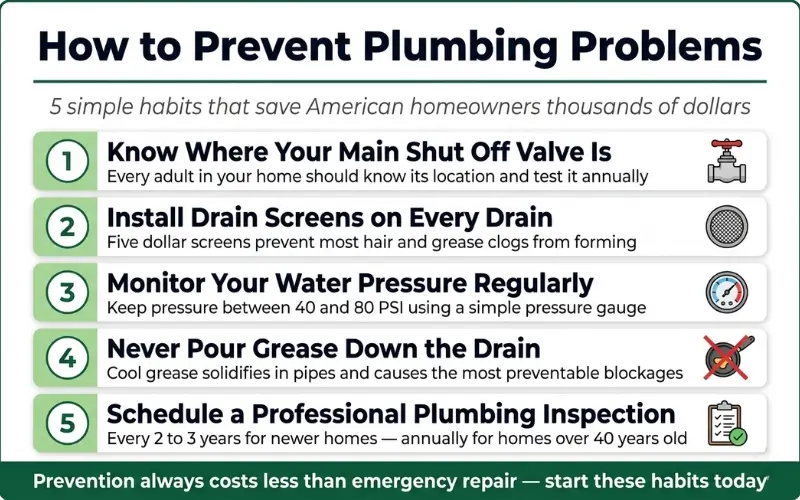
The most expensive plumbing repairs in American homes are almost always preventable. A burst pipe that floods a basement in Detroit, a sewer backup that backs up into a home in Sacramento, a water heater that fails completely in Phoenix. In most cases these disasters follow months of ignored warning signs and skipped maintenance tasks. Prevention is always cheaper than repair and in plumbing the gap between those two costs is enormous.
Know Where Your Main Shut Off Valve Is
Every adult in your household should know exactly where the main shut off valve is located and how to operate it. In a plumbing emergency the ability to shut off all water flow within seconds prevents thousands of dollars in additional water damage. Test the valve once a year by turning it fully off and back on to make sure it operates smoothly when you need it most.
Install Drain Screens on Every Drain
Mesh drain screens over every shower, bathtub, and kitchen sink drain cost less than five dollars each and prevent the vast majority of hair and food particle clogs from forming. The Water Environment Federation identifies drain blockages as one of the top preventable causes of residential plumbing problems across the United States. This single five dollar investment eliminates one of the most common service calls plumbers receive.
Monitor Your Water Pressure Regularly
High water pressure is one of the leading silent causes of accelerated pipe wear, fixture damage, and appliance failure in American homes. The EPA and the American Water Works Association both recommend keeping residential water pressure between 40 and 80 PSI. A water pressure gauge from Home Depot or Lowe’s costs under fifteen dollars and gives you an accurate reading in under two minutes.
Never Pour Grease Down the Drain
Cooking grease is the single most preventable cause of kitchen drain blockages across the United States. Allow grease to cool and solidify in the pan then dispose of it in the trash. Keep a dedicated grease container under the kitchen sink for collecting cooking fats before disposal. This one habit eliminates one of the most common and most costly kitchen plumbing problems entirely.
Schedule a Professional Plumbing Inspection
The American Society of Plumbing Engineers recommends scheduling a professional plumbing inspection every two to three years for homes under 20 years old and annually for homes over 40 years old. A licensed plumber can identify deteriorating pipes, failing valves, and developing blockages before they become emergencies. In states like Florida, Texas, and California where homes experience heavy year round plumbing use, the value of regular professional inspection cannot be overstated.
Plumbing Troubleshooting Guide
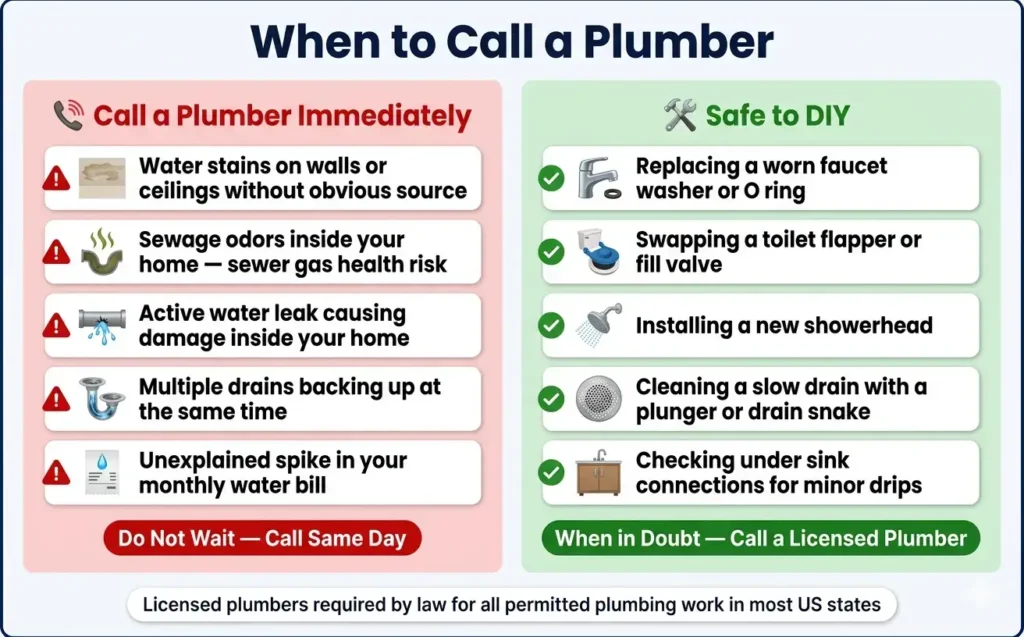
Knowing how to troubleshoot a plumbing problem before calling a plumber saves time, money, and unnecessary service call fees. Most licensed plumbers across the United States charge between 75 and 150 dollars just to show up and diagnose a problem before any repair work begins. A few minutes of systematic troubleshooting on your end can either solve the problem entirely or give the plumber the information they need to fix it faster once they arrive.
Step 1: Identify Where the Problem Is
Before doing anything else, determine whether the problem affects one fixture or multiple fixtures throughout the house. A problem at one fixture points to a localized issue at that specific sink, toilet, or shower. A problem affecting multiple fixtures simultaneously points to the main supply line, main drain line, or water heater, all of which require professional attention.
Step 2: Check the Obvious First
Before assuming the worst, check the simple things first. Is the shut off valve beneath the affected fixture fully open? Is the aerator screen on the faucet clogged with mineral deposits? Has the circuit breaker for an electric water heater tripped? Is the pilot light on a gas water heater still lit? These simple checks resolve a surprising number of plumbing complaints without any tools or professional help.
Step 3: Check Your Water Meter
If you suspect a hidden leak, turn off every water fixture and appliance in the home and watch your water meter for five minutes. If the meter continues to move with everything turned off water is escaping somewhere in your plumbing system. Mark the meter reading, wait two hours without using any water, then check it again. Any movement confirms an active leak that needs professional pipe inspection to locate.
Step 4: Know When to Stop
DIY plumbing troubleshooting has clear limits. Stop and call a licensed plumber when the problem involves the main water supply line, the main sewer line, any gas connected appliance, active water spraying inside the home, sewage backing up into fixtures, or any repair that requires cutting into walls or floors. In most American states including California, Texas, Florida, and New York performing unpermitted plumbing work on these systems is illegal and voids homeowner insurance coverage.
Step 5: Prepare Before the Plumber Arrives
When professional help is needed preparation speeds up the repair and reduces your bill. Clear the area around the problem fixture before the plumber arrives. Know the location of your main shut off valve. Have the make and model of any appliance involved written down and ready. Take photos of any visible damage, leaks, or water stains. The more information you give a licensed plumber upfront the faster and more accurately they can diagnose and fix the problem.
Frequently Asked Questions About Common Plumbing Problems
What is the most common plumbing issue in American homes?
The single most common plumbing issue reported by American homeowners is a leaky faucet. According to the Environmental Protection Agency a dripping faucet wastes more than 3,000 gallons of water per year and millions of American homes have at least one dripping faucet running at any given time. Clogged drains and running toilets follow closely behind as the second and third most frequently reported plumbing complaints across the country.
What is considered a plumbing problem?
A plumbing problem is any condition that disrupts the normal function of your home’s water supply system, drainage system, or fixture connections. This includes visible issues like dripping faucets, slow drains, and running toilets as well as hidden problems like pipe corrosion behind walls, deteriorating supply line connections, and developing blockages in the main sewer line. If your plumbing system is not delivering clean water efficiently or removing wastewater completely that is a plumbing problem regardless of how minor it may seem.
What is the most common plumbing maintenance problem?
Sediment buildup inside water heater tanks is the most commonly neglected plumbing maintenance problem across the United States. The U.S. Department of Energy estimates that sediment accumulation inside an unserviced water heater tank reduces heating efficiency by up to 25 percent and significantly shortens the lifespan of the unit. Most American homeowners never flush their water heater tank, making sediment buildup the leading cause of premature water heater failure nationwide.
Why is my water heater making a banging noise?
A water heater making loud banging, rumbling, or popping noises almost always indicates heavy sediment buildup at the bottom of the tank. When water trapped beneath a thick layer of sediment heats up and tries to push through the sediment layer it creates the rumbling and banging sounds you hear. Flushing the tank by connecting a garden hose to the drain valve at the base of the unit and draining it completely removes the accumulated sediment and eliminates the noise in most cases. If flushing does not resolve the noise the heating element may be failing and a licensed plumber should inspect the unit.
How do you fix a constantly running toilet?
Fixing a constantly running toilet starts with identifying which component inside the tank has failed. Lift the tank lid and observe what happens after a flush cycle completes. If water continues running into the bowl after the tank refills the flapper valve at the bottom of the tank is worn and no longer sealing properly. If water runs over the top of the overflow tube the fill valve or float needs adjustment. Replacement flappers cost less than ten dollars at any hardware store and install in under fifteen minutes without special tools. If replacing the flapper and adjusting the float does not stop the running a licensed plumber should inspect the fill valve assembly for failure.
What is the average cost of unclogging a main sewer line?
The average cost of professionally unclogging a main sewer line in the United States ranges from 150 to 800 dollars depending on the severity of the blockage, the method used, and local labor rates. A standard drain auger service to clear a simple blockage typically costs between 150 and 300 dollars. Hydrojetting uses high pressure water to blast through heavy grease buildup and root intrusion and costs between 250 and 800 dollars according to data from the National Association of Sewer Service Companies. Homeowners in cities like New Orleans, Houston, and Atlanta where tree root intrusion and aging sewer infrastructure are common tend to pay toward the higher end of that range.
What is the 135 rule in plumbing?
The 135 rule in plumbing refers to the maximum allowed angle change for drain pipe direction in a single fitting. Plumbing codes based on the International Plumbing Code prohibit using a single fitting to change a drain pipe direction by more than 135 degrees in one connection. This rule exists because sharp direction changes in drain lines create turbulence that slows wastewater flow, encourages debris accumulation, and increases the likelihood of blockages forming at the fitting. Two 45 degree fittings used in sequence are the standard code compliant method for making direction changes that approach or exceed 90 degrees in residential drain piping across the United States.
Final Thoughts
Plumbing problems are not inevitable emergencies. They are predictable events that follow clear warning signs and respond to consistent maintenance. The homeowners who face the fewest plumbing crises are not lucky. They simply pay attention to their plumbing system, act on early warning signs before they become disasters, and know when a problem requires a licensed professional rather than a DIY attempt.
Every problem covered in this guide has been faced by millions of American homeowners before you. Leaky faucets, clogged drains, running toilets, low water pressure, burst pipes. None of these are mysteries. They have known causes, proven solutions, and realistic cost ranges that let you plan and budget rather than panic and overpay.
At Clever Pro Plumbing, our goal is to give every American homeowner the knowledge they need to make smart decisions about their plumbing system. For a deeper understanding of how your entire plumbing system works from supply to drainage, read our complete plumbing systems guide. And if any of the problems in this article are happening in your home right now, use the troubleshooting steps above, check our dedicated guides for each topic, and call a licensed plumber whenever the situation calls for one.