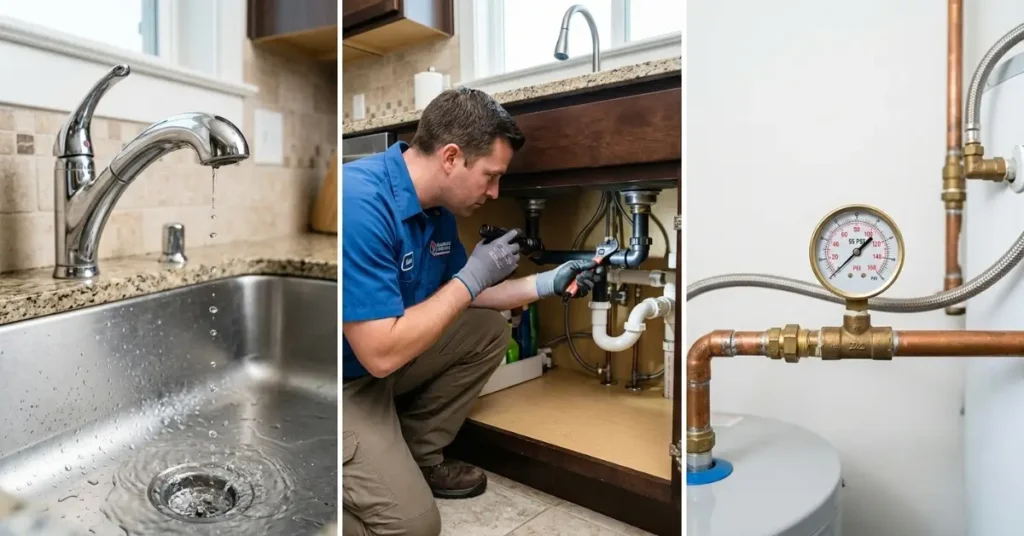
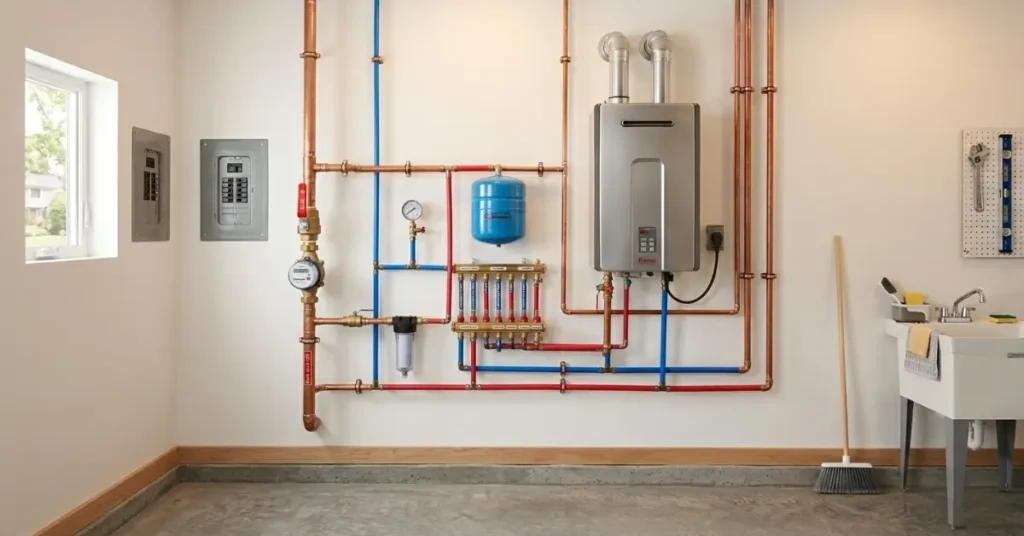
Every home in the United States depends on a properly functioning plumbing system yet most homeowners never think about it until something goes wrong. A burst pipe at 2 AM, a drain that refuses to clear, or a water heater that stops working on a cold January morning in Chicago are the moments when understanding your home’s plumbing system suddenly becomes very important.
Plumbing systems are far more complex than most people realize. Behind your walls, beneath your floors, and under your yard runs an intricate network of pipes, valves, fixtures, and drains that work together every single day to bring clean water in and carry wastewater out. According to the American Society of Plumbing Engineers (ASPE), the average American household uses about 80 to 100 gallons of water per day and every drop of it moves through your plumbing system.
Whether you own a century-old brownstone in Boston, a mid-century ranch home in Phoenix, or a newly built house in suburban Dallas, the fundamentals of how plumbing works remain the same. This guide covers everything you need to know about how plumbing systems work, the main components inside them, the most common problems homeowners face, and exactly when it makes sense to pick up the phone and call a licensed plumber.
What is Plumbing?
Plumbing is the system of pipes, fixtures, valves, and fittings installed inside a building to distribute clean water and remove wastewater safely. It is one of the most essential systems in any residential or commercial structure across the United States. Without a properly working plumbing system, basic daily activities like cooking, bathing, and doing laundry would simply not be possible.
The word plumbing actually comes from the Latin word plumbum, which means lead. For centuries, lead pipes were the standard material used to carry water in homes across Europe and early America. Today, modern plumbing systems use much safer materials like copper, PVC, and PEX piping, which meet the standards set by the International Plumbing Code (IPC) and the Uniform Plumbing Code (UPC).
In the United States, plumbing work is regulated at the state and local level. A licensed plumber in California must pass state board examinations and meet continuing education requirements set by the California Contractors State License Board. Similar licensing requirements exist in Texas, Florida, New York, and every other state across the country. This regulation exists because proper plumbing directly affects public health and safety.
Understanding what a plumbing system is goes beyond just knowing where your pipes are located. A plumbing system includes every component that moves water into your home and removes wastewater out of it. What is plumbing work in practical terms? It covers everything from installing a new kitchen sink in Seattle to repairing a broken sewer line beneath a commercial building in Atlanta. Plumbing is not just pipes and water. It is the backbone of every safe and functional American home.
If you want a deeper understanding of what is plumbing and how the trade developed over thousands of years read our complete definition guide.
How the Plumbing System Works
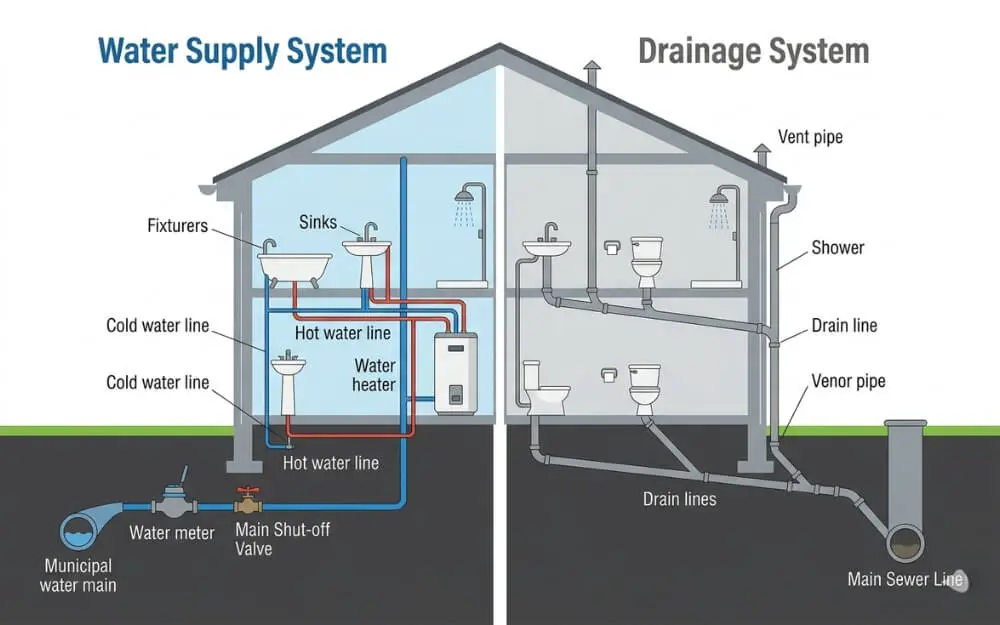
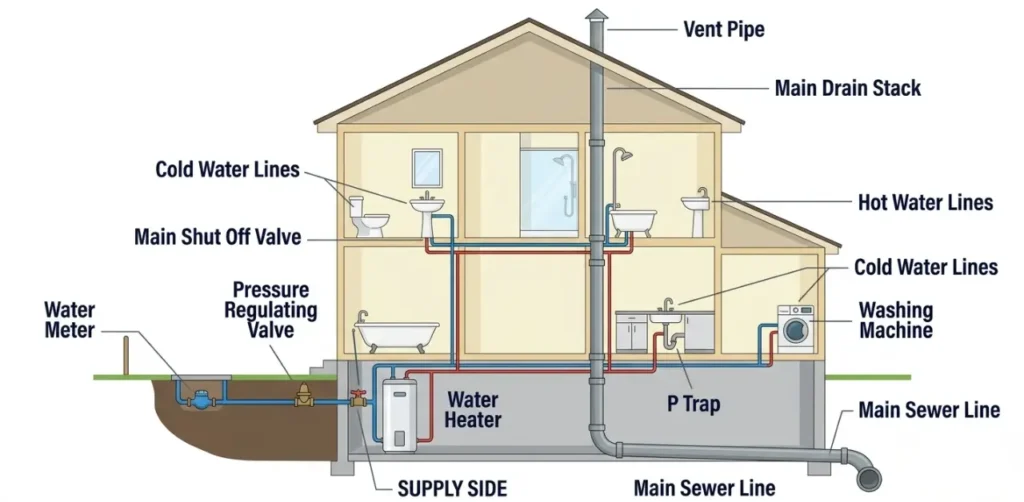
Most homeowners in the United States interact with their plumbing system dozens of times every single day without ever thinking about how it actually works. You turn on a faucet, flush a toilet, or run a dishwasher, and everything happens instantly. Understanding how the plumbing system works gives you a real advantage when something goes wrong inside your home.
Every residential plumbing system in America is built around two separate and equally important systems working together. The first is the water supply system, which brings clean, pressurized potable water into your home from either a municipal water line or a private well. The second is the drain systems, which carries used wastewater and sewage away from your home through a network of drain pipes connected to the main sewer line.
The water supply system works entirely on pressure. When water enters your home it passes first through a water meter, which is typically installed near the foundation or at the property line. From there it moves through the main shut off valve, which is the single most important valve in your entire home. If a pipe bursts anywhere inside your house, turning off this valve immediately stops all water flow and prevents serious water damage.
Inside your home, the supply lines split into two directions. Cold water travels directly to your fixtures while a separate line runs to your water heater, where it is heated before being distributed to sinks, showers, bathtubs, and appliances throughout the house. Properly maintained water pressure in an American home should measure between 40 and 80 PSI according to the standards set by the American Water Works Association (AWWA).
The drainage system works completely differently from the supply side. It relies on gravity rather than pressure to move wastewater down and out of your home. Every sink, toilet, shower, and appliance in your home connects to a series of drain pipes that slope downward at a precise angle, typically one quarter inch per foot, to keep wastewater flowing steadily toward the main sewer line. The International Plumbing Code sets these slope requirements to prevent standing water and blockages inside drain pipes.
One part of home plumbing that most people never think about is the vent system. Every drain in your home is connected to a vent pipe that runs upward through your walls and exits through the roof. These vent pipes allow fresh air to enter the drainage system, which prevents a vacuum from forming inside the pipes. Without proper venting, drains gurgle, traps dry out, and sewer gases can enter your living spaces. The vent system is just as important as the pipes carrying water in and out of your home.
A complete plumbing system diagram shows every pipe, valve, fixture, and connection inside your home in a single labeled drawing.
Types of Plumbing Systems
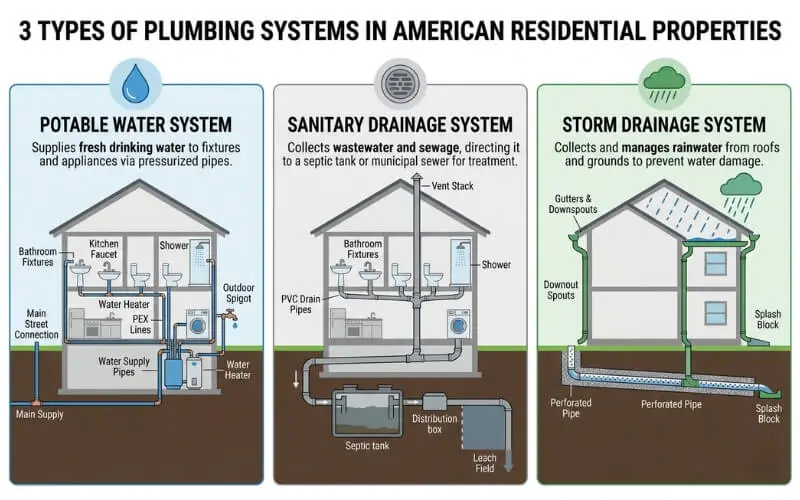
Not every plumbing system is built the same way. The type of plumbing system inside a building depends on its purpose, its size, and the local building codes that apply in that specific state or county. Knowing the different types of plumbing systems helps homeowners and property managers make smarter decisions about repairs, upgrades, and maintenance.
There are three main types of plumbing systems found across residential and commercial properties in the United States. These are the potable water system, the sanitary drainage system, and the storm drainage system. Each one serves a completely different purpose, and each one requires its own set of pipes, fixtures, and connections to function properly.
Potable Water Systems
The potable water system is what most people picture when they think about plumbing. It delivers safe, clean drinking water to every faucet, shower, toilet, and appliance inside a home or building. In cities like Houston, Denver, and Philadelphia, potable water comes from municipal treatment facilities before traveling through underground water mains and into individual homes. In rural areas across states like Montana and Wyoming, homes rely on private wells and pressure tanks instead.
Sanitary Drainage Systems
The sanitary drainage system handles all the wastewater that leaves your home after use. Every time you flush a toilet, drain a bathtub, or run your kitchen sink, that water enters the sanitary drainage system and travels through a network of sloped drain pipes toward the municipal sewer line or a private septic tank. The National Association of Home Builders (NAHB) reports that nearly 20 percent of American homes use a septic system rather than a municipal sewer connection.
Storm Drainage Systems
The storm drainage system is an entirely separate system from your sanitary drainage. It is designed to collect and redirect rainwater and groundwater away from your property to prevent flooding and foundation damage. Gutters, downspouts, French drains, and yard drains all connect to the storm drainage system. In cities like New Orleans and Miami, where heavy rainfall is common, properly functioning storm drainage systems are critical to protecting homes and neighborhoods.
Most residential plumbing systems combine the potable water system and the sanitary drainage system within the same structure. The storm drainage system typically operates outside and around the building. Understanding how all three systems work together gives homeowners a much clearer picture of why plumbing maintenance matters beyond just fixing a leaky faucet.
Types of Plumbing Pipes
Choosing the right pipe material is one of the most important decisions in any plumbing system. The different types of plumbing pipes available today vary in cost, durability, application, and compatibility with local building codes across the United States. Knowing what type of pipes are running through your walls can save you thousands of dollars in repair costs down the road.
Older homes built before the 1970s in cities like Pittsburgh, Cleveland, and Baltimore often contain galvanized steel pipes or even original lead pipes. These materials corrode over time and can contaminate drinking water, which is why the Environmental Protection Agency (EPA) strongly recommends replacing them with modern alternatives. Newer homes built after 2000 almost exclusively use pipes and pipeline materials like copper, PVC, and PEX that meet current building code standards.
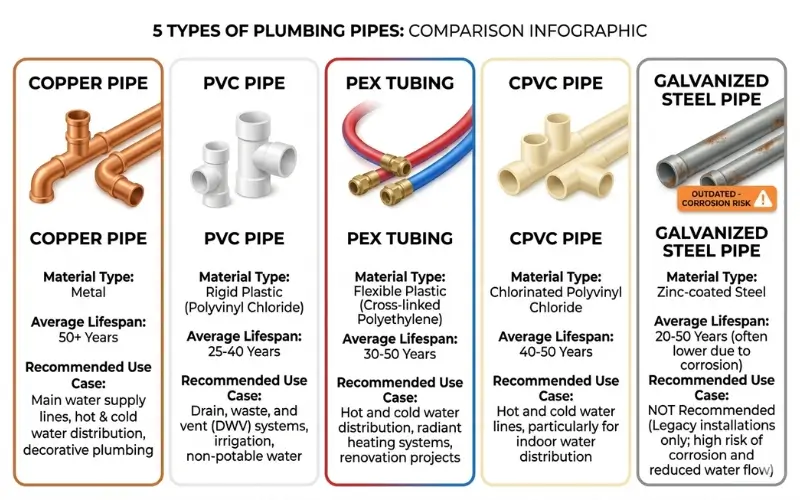
Types of Pipes for Plumbing
Copper Pipes
Copper pipe has been the gold standard for residential water supply lines in America for decades. It is highly durable, naturally resistant to bacteria, and can handle both hot and cold water supply lines without breaking down. The average lifespan of copper pipe runs between 50 and 70 years, making it one of the most reliable choices for homeowners across states like California, Texas, and Illinois. The main drawback is cost as copper is significantly more expensive than plastic alternatives.
PVC Pipes
PVC pipe is the most widely used type of plastic plumbing pipe in the United States today. It is lightweight, affordable, and extremely resistant to pipe corrosion, which makes it the preferred choice for drain pipes, waste lines, and vent systems in residential construction. PVC is not suitable for hot water supply lines because high temperatures cause the material to warp and degrade over time. The American Society for Testing and Materials (ASTM) sets the quality and thickness standards for all PVC plumbing pipe sold in the US market.
PEX Pipes
PEX pipe has rapidly become the most popular choice for new residential construction and whole home repiping projects across the country. It is a flexible type of plastic plumbing pipe that can bend around corners without requiring additional fittings, which significantly reduces installation time and labor costs. PEX handles both hot and cold water supply lines equally well and is highly resistant to freezing, making it an excellent choice for homeowners in colder states like Minnesota, Wisconsin, and Maine. The Plastic Pipe Institute (PPI) certifies all PEX piping products sold in the United States.
CPVC Pipes
CPVC is a chlorinated version of standard PVC pipe that can handle higher water temperatures, making it suitable for both hot and cold water supply lines. It is commonly found in homes across the southeastern United States, particularly in Florida, Georgia, and South Carolina. CPVC costs less than copper but more than standard PVC, placing it in a practical middle ground for budget conscious homeowners.
Galvanized Steel Pipes
Galvanized steel pipe was the standard choice for residential plumbing systems throughout most of the 20th century. These pipes are coated with a layer of zinc to prevent rust, but over decades that zinc coating breaks down from the inside. The result is heavy pipe corrosion, reduced water flow, and discolored water coming from faucets. If your home still has galvanized steel pipes, most licensed plumbers across the country will recommend a full repipe as soon as your budget allows.
Types of Plumbing Pipe Fittings
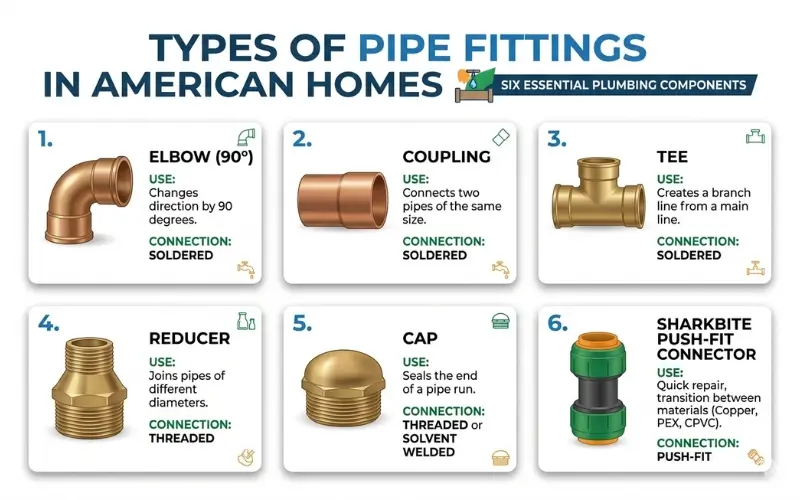
Pipes alone cannot build a complete plumbing system. Pipe fittings are the connectors, elbows, couplings, tees, and reducers that join pipes together and direct water flow throughout your home. Every change in direction, every branch connection, and every transition between different pipe materials requires a specific type of plumbing pipe fitting to create a secure, leak free joint.
The most common pipe fittings used in American residential plumbing include elbows, which change the direction of a pipe run, couplings, which connect two pipes of the same diameter in a straight line, tees, which split one pipe into two separate directions, and reducers, which connect pipes of different diameters together. Every fitting must match the pipe material it connects to and meet the standards outlined in the International Plumbing Code for that specific application.
Compression fittings, push fit fittings, and soldered fittings are the three most common connection methods used with residential pipe fittings in the United States. Push fit fittings, often sold under brand names like SharkBite, have become extremely popular in recent years because they allow homeowners and plumbers to make secure connections without soldering tools or special equipment. These fittings work with copper, PEX, and CPVC pipes, making them one of the most versatile options available in the American plumbing market today.
Main Plumbing Components
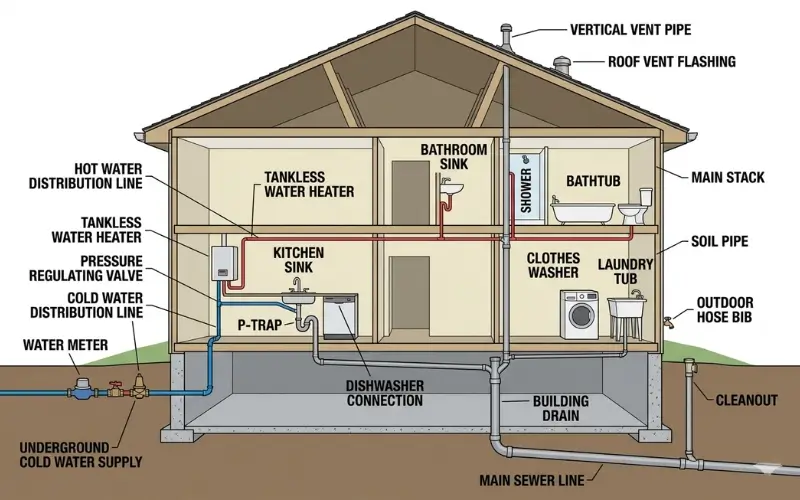
A complete plumbing system is made up of many individual parts working together as one unit. Understanding the main components of a plumbing system helps homeowners identify problems faster, communicate clearly with licensed plumbers, and make smarter decisions about repairs and upgrades. Every component plays a specific role, and when one part fails, the entire system feels the impact.
Most American homeowners only notice their plumbing components when something breaks. A water heater that stops producing hot water on a cold February morning in Chicago, a pressure regulator that fails and sends water hammering through the pipes, or a drain trap that dries out and lets sewer gas into the kitchen are the moments that make plumbing components impossible to ignore.
Water Meter
The water meter is where your home’s plumbing system begins. It measures the total volume of water entering your property and is owned and maintained by your local municipal water utility. In most American cities, the water meter sits in a covered box near the street or at the base of the foundation wall. Reading your water meter regularly is one of the simplest ways to detect a hidden leak inside your home before it causes serious damage.
Main Shut Off Valve
The main shut off valve is the single most important plumbing valve in your entire home. It controls the flow of water from the municipal supply line into your house and can stop all water flow instantly when turned off. Every homeowner in the United States should know exactly where their main shut off valve is located before a plumbing emergency ever occurs. In most homes it sits near the water meter, either inside the basement, in the utility room, or just outside the foundation wall.
Pressure Regulating Valve
The pressure regulating valve, also called a PRV, controls the water pressure entering your home from the municipal supply line. The recommended water pressure for American residential plumbing systems sits between 40 and 80 PSI according to the International Plumbing Code. Without a properly functioning PRV, water pressure that exceeds 80 PSI can damage pipes, stress plumbing fixtures, and significantly shorten the lifespan of appliances like dishwashers and washing machines.
Water Heater
The water heater is one of the largest and most used plumbing components in any American home. It heats cold water from the supply line and stores it at a set temperature until a fixture or appliance calls for hot water. Most homes across the United States use either a traditional tank style water heater, which stores between 30 and 80 gallons of heated water, or a tankless water heater, which heats water on demand without storing it. The U.S. Department of Energy estimates that water heating accounts for approximately 18 percent of total home energy use.
Drain Traps
A drain trap is the curved section of pipe located beneath every sink, shower, and floor drain in your home. It holds a small amount of standing water at all times, which creates a physical seal that blocks sewer gases from rising up through the drain trap and entering your living spaces. The P trap is the most common type found in American residential plumbing, and it is required under every plumbing fixture by the International Plumbing Code. A dry or damaged drain trap is one of the most common causes of sewer smell inside a home.
Vent Pipes
Vent pipes are one of the most overlooked plumbing components in any home. They run vertically through the walls of your house and exit through the roof, allowing fresh air to enter the drainage system and letting sewer gases escape safely above the roofline. Without properly functioning vent pipes, drains gurgle loudly, drain slowly, and sewer odors creep into bathrooms and kitchens. The International Association of Plumbing and Mechanical Officials (IAPMO) sets the standards for vent pipe sizing and placement in residential construction across the United States.
Types of Plumbing Connections
Understanding the different types of plumbing connections is essential for anyone doing any kind of plumbing work inside their home. A plumbing connection is the joint where two pipes meet, and the type of connection used depends on the pipe material, the water pressure involved, and the specific requirements of the local building code.
Soldered connections, also called sweat joints, are the traditional method used with copper pipe. A plumber uses a torch and solder to create a permanent, watertight bond between two copper fittings. Threaded connections are used with galvanized steel and some brass fittings, where pipes screw directly into each other using tapered threads sealed with pipe thread tape or compound. Solvent welded connections use a chemical solvent cement to permanently fuse PVC and CPVC pipes and fittings together.
Push fit connections have transformed residential plumbing across America in recent years. Brands like SharkBite manufacture push fit fittings that require no tools, no soldering, and no special skills to install. A homeowner in suburban Nashville or a first time DIYer in Portland can make a secure, code compliant plumbing connection in seconds using a push fit fitting. These connections work with copper, PEX, and CPVC pipes, making them one of the most versatile types of plumbing connections available today.
Common Plumbing Problems
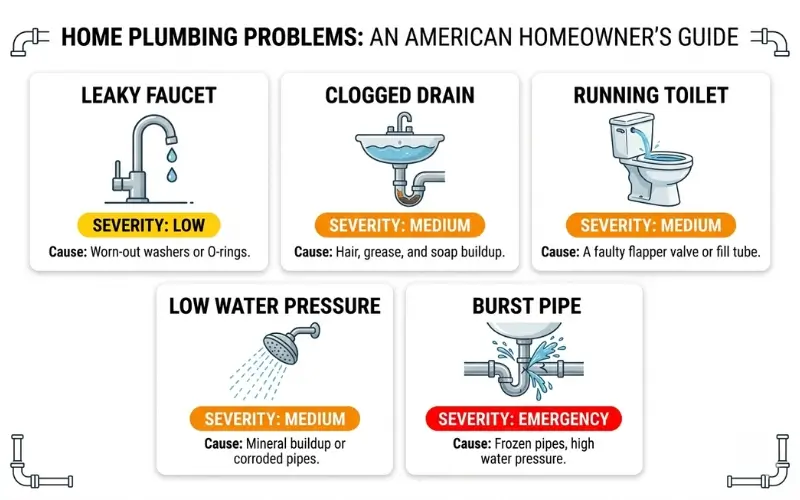
Every homeowner in the United States will deal with a plumbing problem at some point. Some issues are minor inconveniences that can wait until Monday morning. Others demand immediate attention before they turn into thousands of dollars in water damage. Knowing the most common searched plumbing problems helps you recognize warning signs early and respond before a small issue becomes a serious one.
The American Insurance Association estimates that water damage from plumbing failures costs American homeowners more than 10 billion dollars every single year. That number includes everything from a slow dripping faucet that wastes thousands of gallons annually to a burst pipe that floods an entire basement in minutes. Most of these situations are preventable when homeowners understand what to watch for inside their homes.
Leaky faucets, clogged drains, running toilets, low water pressure, burst pipes and water heater issues are the most common plumbing problems American homeowners face every year.
Leaky Faucets
A leaky faucet is the most common plumbing problem reported by American homeowners. That steady drip from a kitchen faucet in Denver or a bathroom tap in San Diego might seem harmless, but the Environmental Protection Agency estimates that a faucet dripping once per second wastes more than 3,000 gallons of water every year. Leaky faucets are usually caused by worn out washers, damaged O rings, or corroded valve seats inside the faucet body. In most cases a licensed plumber can handle these plumbing repairs within an hour.
Clogged Drains
A clogged drain is the second most common plumbing problem in American homes. Kitchen drains clog from grease, food particles, and soap buildup. Bathroom drains fill with hair, soap scum, and mineral deposits over time. A single slow drain in one fixture usually points to a localized blockage close to that fixture. When multiple drains throughout the house run slowly at the same time, that signals a deeper drain blockage somewhere in the main line running beneath your home.
Running Toilet
A running toilet is one of those plumbing problems that homeowners often ignore because it seems harmless. The reality is that a toilet that keeps running can waste between 200 and 700 gallons of water every single day according to the Water Research Foundation. The most common causes are a worn flapper valve, a faulty fill valve, or a float that sits too high inside the tank. Fixing a running toilet is usually a straightforward repair that costs very little in parts and labor.
Low Water Pressure
Low water pressure turns a refreshing shower into a frustrating trickle and makes washing dishes feel like it takes forever. In older homes across cities like Cincinnati, St. Louis, and Buffalo, low water pressure is often caused by decades of mineral buildup and pipe corrosion inside aging galvanized steel pipes. In newer homes, low pressure usually points to a failing pressure regulating valve, a partially closed shut off valve, or a hidden leak somewhere in the supply line. The recommended residential water pressure in the United States sits between 40 and 60 PSI for comfortable everyday use.
Burst Pipes
A burst pipe is one of the most destructive plumbing problems any homeowner can face. Water escaping from a burst pipe can release hundreds of gallons in a very short time, causing catastrophic water damage to walls, floors, ceilings, and personal belongings. In northern states like Michigan, New York, and Wisconsin, frozen pipes are the leading cause of burst pipe emergencies during the winter months. The Insurance Institute for Business and Home Safety reports that pipe bursts are one of the leading causes of property damage claims filed across the United States every year.
Common Winter Plumbing Problems
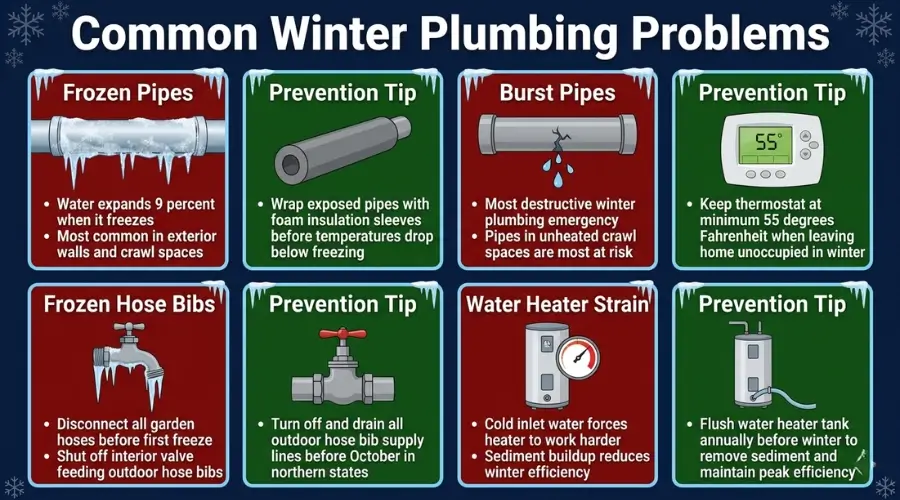
Winter creates a specific set of plumbing challenges for homeowners across the northern and central United States. When outdoor temperatures drop below freezing, the water inside exposed or poorly insulated pipes can freeze and expand. Since water expands by approximately 9 percent when it freezes, the pressure buildup inside a pipe can cause it to crack or burst completely.
The most vulnerable pipes during a cold winter are those running along exterior walls, inside unheated crawl spaces, and beneath kitchen or bathroom cabinets that sit against an outside wall. Homeowners in states like North Dakota, Minnesota, and Vermont deal with frozen pipe risks for several months every year. Keeping cabinet doors open during extreme cold snaps, letting faucets drip slowly overnight, and adding pipe insulation to exposed supply lines are the three most effective ways to prevent winter pipe damage.
Common Plumbing Problems in Old Houses
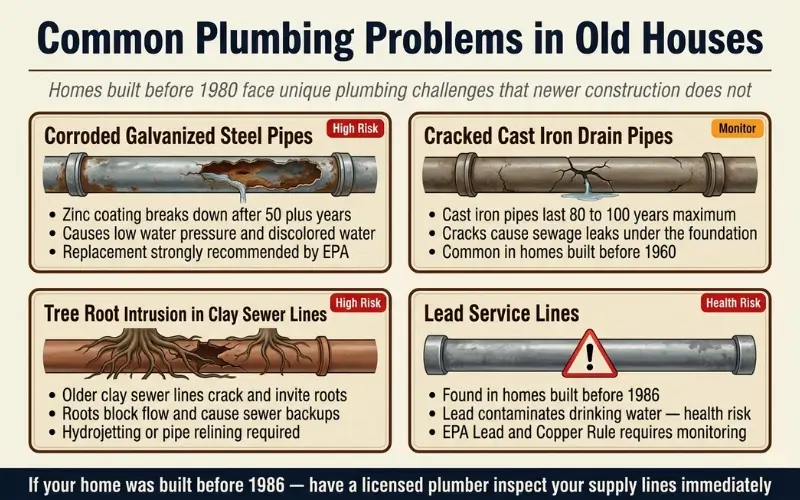
Older homes come with a unique set of plumbing challenges that newer construction simply does not face. A house built in the 1950s in neighborhoods like Lincoln Park in Chicago or Midtown Atlanta carries decades of wear inside its plumbing system. Common plumbing problems in old houses include corroded galvanized steel pipes that restrict water flow, original cast iron drain pipes that crack and leak after decades underground, outdated clay sewer lines that tree roots infiltrate and destroy, and lead service lines that contaminate drinking water and pose serious health risks.
The EPA’s Lead and Copper Rule requires water utilities across the United States to monitor and reduce lead levels in drinking water, but the responsibility for replacing lead pipes inside private homes falls on the homeowner. If your home was built before 1986, having a licensed plumber inspect your supply lines for lead or heavily corroded galvanized steel is one of the most important steps you can take to protect your family’s health and your home’s plumbing system.
Plumbing Repairs vs Installation
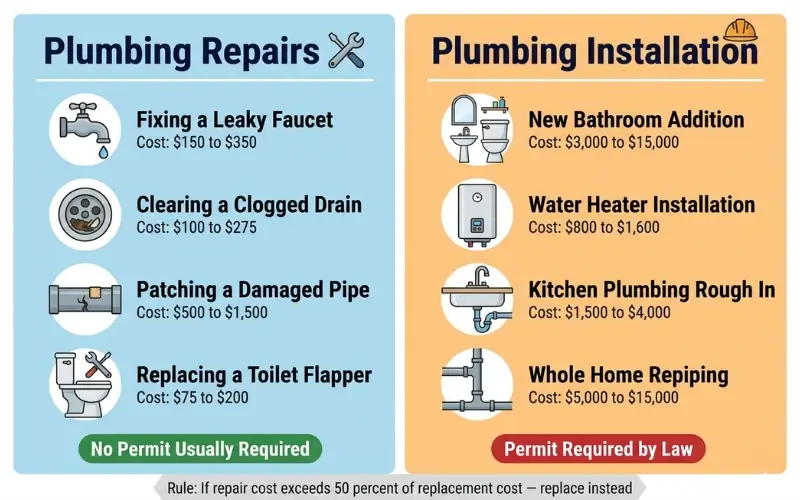
One of the most common questions American homeowners ask a licensed plumber is simple. Should I repair this or replace it entirely? The answer depends on the age of the system, the extent of the damage, and the long term cost of each option. Understanding the difference between plumbing repairs and installation helps you make a smarter financial decision before you spend a single dollar.
Plumbing repairs and plumbing installation are two completely different scopes of work. A repair addresses an existing problem within a system that is already in place. An installation involves setting up new plumbing components, new fixtures, or entirely new pipe systems where none existed before or where the old system has reached the end of its useful life.
What Counts as a Plumbing Repair
Most plumbing repairs fix or restore an existing component back to proper working condition without changing the overall layout of the system. Fixing a leaky faucet in a Phoenix kitchen, patching a cracked water line beneath a home in Raleigh, clearing a stubborn drain blockage in a Chicago bathroom, or replacing a worn flapper valve inside a toilet tank are all plumbing repairs. They address a specific problem without changing the overall layout or design of the existing system.
Most plumbing repairs fall into two categories. Emergency repairs are those that require immediate attention to stop active water damage or restore essential water service. Non emergency repairs are those that can be scheduled during normal business hours without risk of further damage. A burst pipe flooding a basement in Minneapolis is an emergency repair. A slow dripping faucet in a guest bathroom is a non emergency repair that can wait a few days without serious consequence.
What Counts as Plumbing Installation
New plumbing installation projects like adding a bathroom in an unfinished basement in suburban Boston or setting up rough in plumbing for a kitchen remodel in Austin always require a permit from the local building department. Connecting a new tankless water heater to replace an old tank unit in a Seattle home is also an installation project rather than a repair.
New plumbing installation almost always requires a permit from the local building department. In cities like Los Angeles, New York, and Houston, pulling a plumbing permit before starting installation work is not optional. It is a legal requirement enforced by local code inspectors. The permit process exists to ensure that all new plumbing work meets the standards set by the International Plumbing Code and protects the safety of the homeowner and future occupants of the property.
Pipe Repair vs Relining vs Replacement
When a drain pipe or sewer line develops a problem, homeowners typically have three options to consider. A direct pipe repair fixes the specific damaged section by cutting out the bad portion and replacing it with new pipe. Pipe relining, also called cured in place pipe lining, inserts a flexible resin liner inside the existing damaged pipe and hardens it to form a smooth new pipe within the old one. Full pipe replacement removes the entire old pipe system and installs completely new piping from start to finish.
Pipe relining has grown significantly in popularity across American cities over the past decade because it requires minimal excavation. A plumbing contractor can reline a damaged sewer line beneath a yard in San Francisco or a driveway in Charlotte without digging up the entire property. The National Association of Sewer Service Companies (NASSCO) reports that pipe relining costs between 80 and 250 dollars per linear foot depending on pipe diameter, depth, and local labor rates.
When Repair Stops Making Sense
There is a point where continuing to repair an aging plumbing system stops making financial sense. Most licensed plumbers across the United States follow a general rule. If the cost of a repair exceeds 50 percent of the cost of full replacement, replacement is the smarter long term investment. This rule applies especially to water heaters older than 12 years, galvanized steel pipe systems showing widespread corrosion, and cast iron drain systems in homes built before 1960.
A plumbing contractor can perform a thorough inspection and give you an honest assessment of whether your system needs targeted repairs or a complete installation of new components. In many cases investing in proper installation upfront saves homeowners in cities like Detroit, Philadelphia, and Tampa from paying for the same repair over and over again on a system that has simply reached the end of its life.
When to Call a Plumber
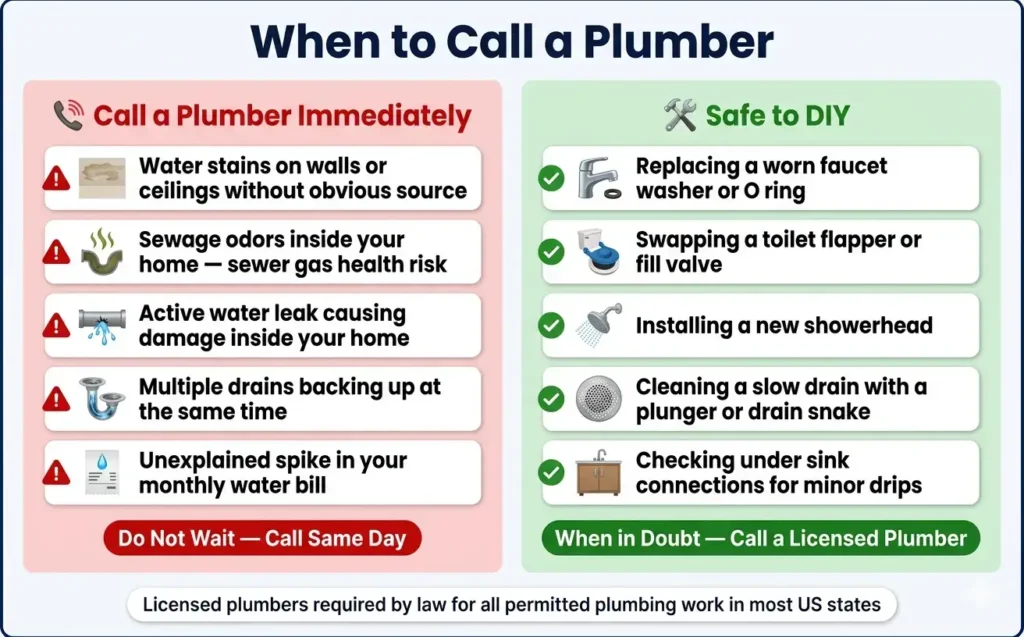
Knowing when to call a plumber is one of the most valuable pieces of knowledge any American homeowner can have. Some plumbing problems are straightforward enough for a confident DIYer to handle on a Saturday afternoon. Others require the training, tools, and licensing that only a professional plumber can bring to the job. Making the wrong call in either direction costs you time, money, and stress.
The general rule most plumbing professionals across the United States follow is simple. If the problem involves the main water supply line, the main sewer line, gas connected appliances, or any situation where active water is causing damage inside your home, you call a licensed plumber immediately. Everything else can be evaluated based on your skill level, the tools you have available, and the potential consequences of getting it wrong.
Signs You Need to Call a Plumber
There are clear warning signs that tell you a plumbing problem has moved beyond the reach of a DIY fix. Water stains appearing on ceilings or walls without an obvious source indicate a hidden pipe leak somewhere inside the structure. A sudden unexplained spike in your monthly water bill points to a leak that is running continuously somewhere in the system. Gurgling sounds coming from multiple drains at the same time suggest a blockage deep in the main drain line rather than at an individual fixture.
Sewage odors inside your home are never something to ignore. That smell means sewer gas is entering your living space through a dry drain trap, a cracked vent pipe, or a damaged sewer line. Sewer gas contains hydrogen sulfide and methane, both of which pose serious health risks with prolonged exposure. Any homeowner in the United States smelling sewage inside their home should call a licensed plumber the same day rather than waiting to see if the smell goes away on its own.
When to Call a Plumber for a Clogged Drain
A single slow drain in one bathroom is usually a localized blockage that a plunger or a basic drain snake can clear without professional help. The situation changes completely when multiple drains throughout the house run slowly or back up at the same time. That pattern points to a blockage in the main sewer line rather than an individual drain pipe, and clearing a main line blockage requires professional equipment like a motorized drain auger or a hydrojetting machine.
Tree root intrusion is one of the most common causes of main sewer line blockages in older American neighborhoods. In cities like Indianapolis, Kansas City, and Memphis, mature trees planted decades ago send roots directly into aging clay sewer lines searching for water. A licensed plumber with a sewer camera can inspect the line, confirm the cause of the blockage, and recommend the most effective solution. Attempting to clear a root filled sewer line without professional equipment almost always makes the problem worse.
When to Call a Plumber for a Clogged Toilet
A toilet that will not clear after two or three attempts with a standard plunger needs professional attention. Using excessive force with a plunger or a cheap drain snake on a stubborn toilet clog can crack the porcelain, damage the wax ring seal at the base of the toilet, or push the blockage deeper into the drain line where it becomes much harder to reach. A licensed plumber has the right tools to clear a stubborn toilet clog safely without damaging the fixture or the surrounding plumbing.
If a toilet backs up and raw sewage or dirty water appears in other fixtures like a nearby bathtub or floor drain at the same time, that is a plumbing emergency that requires an emergency plumber right away. That situation means the main sewer line is completely blocked and wastewater has nowhere to go except back up through the lowest fixtures in the house. Homeowners in cities like Orlando, Sacramento, and Columbus should keep the number of a reliable emergency plumber saved in their phone before a situation like this ever arises.
When Should I Call a Plumber Instead of DIY
The honest answer is that most plumbing repairs beyond the very basics carry real risk when attempted without proper training. Replacing a faucet washer, installing a new showerhead, or swapping out a toilet flapper are all reasonable DIY tasks for a careful homeowner. Anything involving soldering copper pipes, modifying the main water supply line, working on a gas water heater, or making changes to the drain and vent system falls firmly into licensed plumber territory.
The stakes are high enough that most states require a licensed plumber for any permitted plumbing work inside a residence. In states like California, Florida, and Texas, performing unpermitted plumbing work can void your homeowner’s insurance, create problems when you sell the property, and result in fines from the local building department. Calling a licensed plumber for work that genuinely requires one is always the smarter and safer choice in the long run.
Plumbing System Maintenance Tips
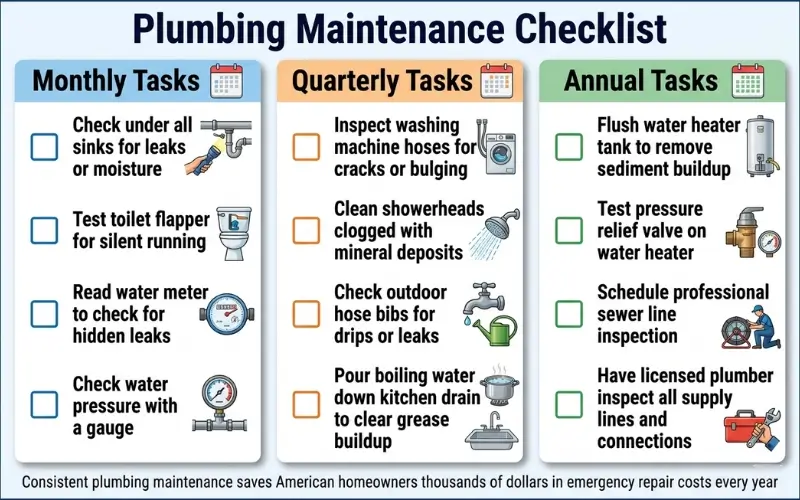
Most plumbing emergencies do not happen without warning. They build slowly over months and years through neglect, mineral buildup, and minor issues that never get addressed. A consistent approach to plumbing system maintenance is the single most effective way to protect your home, avoid unexpected repair bills, and extend the life of every pipe, fixture, and appliance connected to your plumbing system.
The American Home Shield Corporation reports that homeowners who perform regular plumbing preventative maintenance spend significantly less on emergency repairs over the lifetime of their home compared to those who only call a plumber when something breaks. In a country where the average emergency plumber call in cities like Chicago, Houston, and Atlanta costs between 150 and 500 dollars just for after hours service fees, preventative maintenance pays for itself very quickly.
Inspect Your Pipes Regularly
A basic pipe inspection does not require any special tools or professional training. Walk through your home every few months and look under every sink, behind every toilet, and around every visible pipe connection for signs of moisture, corrosion, or discoloration. Small water stains on cabinet floors beneath kitchen and bathroom sinks are often the first visible sign of a slow leak that has been running for weeks. Catching these early saves you from mold remediation costs, structural wood damage, and expensive water damage repairs down the road.
Pay particular attention to pipe connections in older homes built before 1980 in neighborhoods across cities like Detroit, Cleveland, and Baltimore. These homes often have original galvanized steel or cast iron pipes that are approaching or exceeding their expected service life. A licensed plumber can perform a professional pipe inspection using a sewer camera or pressure testing equipment to identify hidden deterioration inside pipes that look fine from the outside.
Test Your Shut Off Valves
Most American homeowners never touch their shut off valves until a plumbing emergency forces them to. The problem is that valves that sit unused for years can seize, corrode, or fail completely at exactly the moment you need them most. Turn every shut off valve in your home including the main shut off valve, the individual fixture valves under sinks and toilets, and the valves on your water heater fully off and back on again at least once every year to keep them operating smoothly.
Monitor Your Water Pressure
Consistently high water pressure is one of the leading causes of accelerated pipe wear, fixture damage, and appliance failure in American homes. A simple water pressure gauge purchased at any hardware store like Home Depot or Lowe’s for under 15 dollars lets you check your home’s water pressure in under two minutes. Attach it to an outdoor hose bib and read the pressure with all fixtures turned off inside the house. If the reading consistently exceeds 80 PSI, contact a licensed plumber to inspect and adjust your pressure regulating valve before the excess pressure causes lasting damage.
Flush Your Water Heater Annually
Sediment buildup inside a water heater tank is one of the most overlooked aspects of water heater maintenance across the United States. Hard water minerals like calcium and magnesium settle at the bottom of the tank over time, creating an insulating layer between the burner and the water. This forces the heater to work harder, consumes more energy, and dramatically shortens the lifespan of the unit. Flushing your water heater tank once every year removes accumulated sediment and keeps the unit running at peak efficiency. Homeowners in states with notoriously hard water like Arizona, Nevada, and Texas should consider flushing their water heaters twice annually.
Keep Drains Clean
Drain cleaning is one of the simplest and most effective forms of plumbing preventative maintenance any homeowner can perform. Pour a pot of boiling water down your kitchen drain once a week to break up grease and soap buildup before it hardens into a stubborn blockage. Install mesh drain screens over every shower and bathtub drain to catch hair before it reaches the pipe. Avoid pouring cooking grease, coffee grounds, or starchy foods down any drain in your home. These are the three most common contributors to serious drain blockages in American residential kitchens according to the Water Environment Federation.
Install a Water Softener in Hard Water Areas
Hard water is a significant but often invisible threat to plumbing systems across large parts of the United States. The United States Geological Survey (USGS) estimates that approximately 85 percent of American homes receive hard water from their municipal supply or private well. Hard water carries dissolved calcium and magnesium minerals that build up inside pipes, water heaters, and appliances over time, gradually restricting water flow and reducing efficiency. Homeowners in hard water states like Texas, Arizona, Florida, and Kansas can significantly extend the life of their entire plumbing system by installing a whole house water softener.
Create a Plumbing Maintenance Checklist
A written plumbing maintenance checklist removes the guesswork from home maintenance and ensures that nothing gets overlooked from season to season. A basic checklist for American homeowners should include monthly tasks like checking under sinks for leaks and testing toilet flappers for silent running. Quarterly tasks should include inspecting washing machine hoses for cracks or bulging, cleaning showerheads clogged with mineral deposits, and checking outdoor hose bibs for drips. Annual tasks should include flushing the water heater, testing the pressure relief valve on the water heater, scheduling a professional sewer line inspection, and having a licensed plumber check the overall condition of supply lines and drain connections throughout the home.
Prepare Your Plumbing for Winter
Winter preparation is a critical part of plumbing system maintenance for homeowners across the northern and central United States. Before temperatures drop below freezing, disconnect and drain all outdoor garden hoses and shut off the interior valves feeding outdoor hose bibs. Add pipe insulation to any supply lines running through unheated spaces like garages, crawl spaces, and attics. If you plan to leave your home unoccupied during a cold stretch in states like Minnesota, Michigan, or Colorado, keep the thermostat set no lower than 55 degrees Fahrenheit to prevent pipes from freezing inside the walls.
Plumbing Costs & Pricing
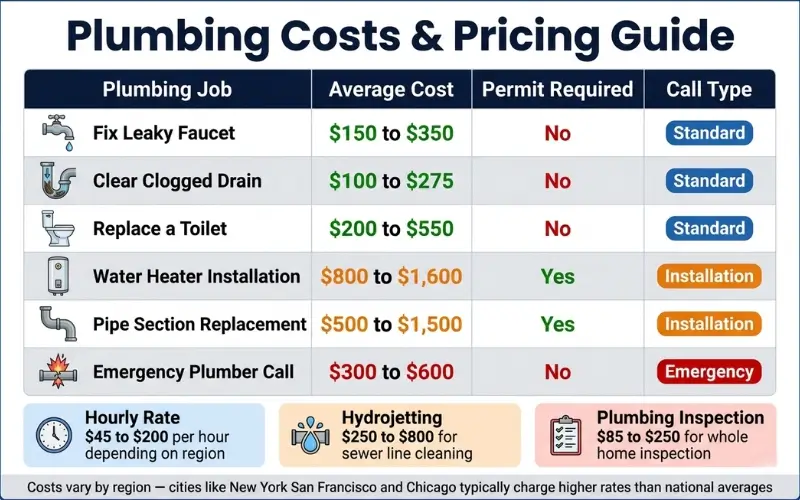
Understanding plumbing costs before you need a plumber puts you in a much stronger position when something goes wrong inside your home. Plumbing prices vary significantly across the United States depending on the type of work, the region of the country, the time of day, and the experience level of the contractor you hire. A homeowner in San Francisco will pay very different rates than a homeowner in rural Tennessee for the exact same repair.
HomeAdvisor reports that the average plumber cost for a standard service call in the United States falls between 175 and 450 dollars for most common residential repairs. That range covers the service call fee, the first hour of labor, and basic materials for straightforward jobs. More complex repairs involving main lines, water heaters, or extensive pipe work push costs considerably higher depending on the specific situation and local labor market rates.
How Plumbers Charge for Their Work
Most licensed plumbers across the United States use one of two pricing structures. The first is an hourly rate model where the plumber charges a set amount per hour of labor plus the cost of materials used on the job. Hourly rates for licensed plumbers range from 45 to 200 dollars per hour depending on the region, with rates in major metropolitan areas like New York City, Boston, and San Francisco sitting at the higher end of that scale. The second model is a flat rate system where the plumber quotes a fixed price for a specific job regardless of how long it takes to complete.
Most homeowners prefer flat rate pricing because it eliminates the uncertainty of watching the clock during a repair. A flat rate quote for replacing a bathroom faucet in Dallas or clearing a kitchen drain in Denver gives you a clear number upfront so you can make an informed decision before any work begins. Always ask your plumber which pricing model they use before agreeing to any work.
Plumbing Cost Estimator by Job Type
Estimating plumbing costs before calling a contractor helps you budget accurately and avoid surprises when the invoice arrives. The following ranges reflect average national costs compiled from data published by Angi, HomeAdvisor, and the Bureau of Labor Statistics for common residential plumbing jobs across the United States.
Fixing a leaky faucet typically costs between 150 and 350 dollars including parts and labor. Replacing a toilet runs between 200 and 550 dollars depending on the fixture selected and the complexity of the installation. Clearing a clogged drain costs between 100 and 275 dollars for a standard blockage at an individual fixture. A full water heater installation cost for a traditional tank unit runs between 800 and 1,600 dollars including the unit, labor, and disposal of the old heater. Replacing a section of damaged pipe costs between 500 and 1,500 dollars depending on the pipe material, the location inside the home, and the length of pipe being replaced.
Emergency Plumber Cost
Emergency plumber cost is significantly higher than standard daytime service rates. Most plumbing companies across the United States charge an emergency or after hours premium that adds between 100 and 300 dollars to the base service call fee for evenings, weekends, and holidays. A burst pipe flooding a basement in Minneapolis at 11 PM on a Saturday night will cost considerably more to address than the same repair performed on a Tuesday afternoon.
The national average emergency plumber cost runs between 300 and 600 dollars for after hours calls according to data from Angi. In high cost cities like Los Angeles, Seattle, and Washington DC, emergency plumbing rates can exceed 1,000 dollars for complex situations involving main line failures or major water heater breakdowns. Keeping a small plumbing emergency fund set aside is a practical step every American homeowner should consider.
Hydrojet Plumbing Cost
Hydrojetting is a professional drain cleaning method that uses highly pressurized water to blast through stubborn blockages and clear buildup from the interior walls of drain pipes. It is significantly more effective than a standard drain snake for clearing grease buildup, mineral scale, and tree root intrusion from sewer lines. Hydrojet plumbing cost typically runs between 250 and 800 dollars for a standard residential sewer line cleaning according to the National Association of Sewer Service Companies. Homes in cities like New Orleans, Houston, and Jacksonville with older sewer infrastructure and heavy tree canopy coverage often require hydrojetting services more frequently than newer developments.
Plumbing Inspection Cost
A professional plumbing inspection gives homeowners a complete picture of the current condition of every pipe, fixture, valve, and connection inside their home. Plumbing inspection cost for a standard whole home inspection ranges from 85 to 250 dollars in most American markets. Inspections that include a sewer camera inspection to evaluate the condition of underground drain lines add an additional 250 to 500 dollars to the total cost depending on the length of the sewer line and the local rates charged by plumbing contractors in that market.
A plumbing inspection is one of the smartest investments a homeowner can make before purchasing an older property. Real estate agents across cities like Philadelphia, Chicago, and Portland routinely recommend a professional plumbing inspection as part of the overall home inspection process for any home built before 1985. Identifying a failing sewer line or corroded pipe system before closing on a purchase can save a buyer tens of thousands of dollars in unexpected repairs after the sale.
Permit Costs for Plumbing Work
Any plumbing installation or major repair that requires a permit adds permit cost to the overall project budget. Plumbing permit costs vary widely across different states and municipalities. In most American cities permit fees for standard residential plumbing work range from 50 to 500 dollars depending on the scope of the project and the local fee schedule. Major projects like whole home repiping or new bathroom additions carry higher permit fees that reflect the complexity and inspection requirements of the work involved.
Never hire a plumbing contractor who suggests skipping the permit process to save money. Unpermitted plumbing work creates serious problems when you sell your home, can void your homeowner’s insurance coverage for related claims, and may require costly removal and reinstallation if discovered during a future inspection. The permit cost is always worth paying to protect your investment and ensure the work meets current code requirements.
Frequently Asked Questions About Plumbing Systems
What is a plumbing system in a house?
A plumbing system in a house is a network of pipes, fixtures, valves, and drains that work together to deliver clean water into the home and carry wastewater safely out of it. Every residential plumbing system in the United States consists of two separate sides — the water supply system that brings pressurized potable water in, and the drainage system that removes wastewater through gravity fed drain pipes connected to the main sewer line or a private septic tank.
What are the main components of a plumbing system?
The main components of a plumbing system include the water meter, the main shut off valve, the pressure regulating valve, the water supply pipes, the water heater, individual fixture shut off valves, drain pipes, drain traps, vent pipes, and the main sewer line connection. Each component serves a specific purpose, and the failure of any single component affects the performance of the entire system. Homeowners should familiarize themselves with the location of each major component before a plumbing emergency occurs.
What are the three main types of plumbing systems?
The three main types of plumbing systems found in American residential and commercial properties are the potable water system, the sanitary drainage system, and the storm drainage system. The potable water system delivers clean drinking water to fixtures and appliances. The sanitary drainage system removes wastewater from the home to the municipal sewer or septic tank. The storm drainage system collects and redirects rainwater away from the property through gutters, downspouts, and underground drainage pipes.
What are the different types of plumbing pipes used in homes?
The most common types of plumbing pipes used in American homes today are copper, PVC, PEX, CPVC, and galvanized steel. Copper is the traditional choice for water supply lines and offers a lifespan of 50 to 70 years. PVC is the standard material for drain pipes and vent systems. PEX is the most popular choice for new construction and repiping projects because of its flexibility, freeze resistance, and lower installation cost. CPVC handles both hot and cold supply lines at a lower cost than copper. Galvanized steel is found only in older homes and is considered outdated by most licensed plumbers across the United States.
When should I call a plumber instead of fixing it myself?
You should call a licensed plumber when the problem involves the main water supply line, the main sewer line, gas connected water heaters, or any situation where active water is causing damage inside your home. DIY repairs are reasonable for minor tasks like replacing a faucet washer, swapping a toilet flapper, or installing a new showerhead. Any work involving bathroom plumbing modifications, soldering copper pipes, pulling a permit, or changes to the drain and vent system should always be handled by a licensed plumber. Most states including California, Texas, and Florida legally require a licensed plumber for all permitted residential plumbing work.
How much does a plumber cost for common repairs?
Plumber cost for common residential repairs in the United States ranges from 150 to 450 dollars for standard daytime service calls. Fixing a leaky faucet typically costs between 150 and 350 dollars. Clearing a clogged drain runs between 100 and 275 dollars. Replacing a toilet costs between 200 and 550 dollars. Emergency plumber cost for after hours calls adds between 100 and 300 dollars to the base service fee. A full water heater installation runs between 800 and 1,600 dollars including the unit and labor. Costs vary significantly by region, with major cities like New York, San Francisco, and Chicago sitting at the higher end of national pricing ranges.
How do you maintain a home plumbing system?
Maintaining a home plumbing system effectively requires consistent attention to several key areas throughout the year. Inspect under every sink and around visible pipe connections monthly for signs of moisture or corrosion. Pay close attention to kitchen plumbing connections under the sink monthly as these are among the most common spots where slow leaks first appear. Test all shut off valves annually to prevent them from seizing. Monitor water pressure regularly and keep it between 40 and 80 PSI. Flush your water heater tank once a year to remove sediment buildup. Schedule a professional plumbing inspection every two to three years, and prepare all exposed pipes for freezing temperatures before winter arrives in your region of the United States.
What causes low water pressure in a house?
Low water pressure in a house is most commonly caused by mineral buildup and pipe corrosion inside aging galvanized steel pipes, a failing or incorrectly set pressure regulating valve, a partially closed main shut off valve, or a hidden leak somewhere in the supply line. In older neighborhoods across cities like Cincinnati, Pittsburgh, and St. Louis, corroded municipal water mains can also reduce pressure at the meter before water even enters the home. A licensed plumber can perform a pressure test and pipe inspection to identify the exact cause and recommend the most effective solution for restoring proper water pressure throughout the house.
Final Thoughts
A well maintained plumbing system is one of the most valuable assets any American homeowner can have. Understanding how your plumbing works, what components make it function, and when something needs professional attention gives you a real advantage over the unexpected. The knowledge you have built through this guide puts you in a stronger position every single time a plumbing issue arises inside your home.
Plumbing problems rarely fix themselves. A slow drip becomes a water damaged cabinet. A gurgling drain becomes a backed up sewer line. Catching small issues early, staying consistent with basic maintenance, and knowing when to call a licensed plumber are the three habits that separate homeowners who rarely face plumbing emergencies from those who seem to deal with them constantly.
At Clever Pro Plumbing, we believe every homeowner deserves reliable information to make smart decisions about their home. Whether you are dealing with a leaky faucet in your kitchen, planning a bathroom renovation, or simply trying to understand what is running behind your walls, this guide is here as a resource you can return to whenever you need it.